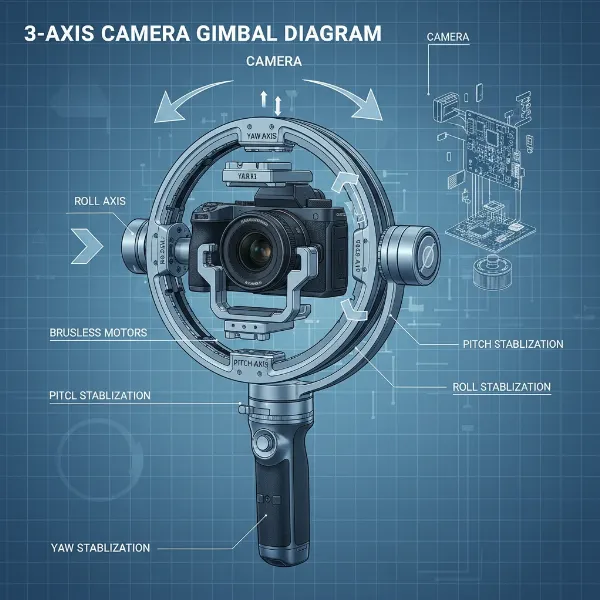
Keeping your gimbal’s firmware up-to-date is more than just a routine maintenance task; it’s essential for unlocking new functionalities, improving performance, and ensuring the longevity of your device. Whether you own a DJI, Zhiyun, or Moza gimbal, understanding the correct update procedure can save you from potential headaches and elevate your videography experience. This comprehensive guide will walk you through the process for each major brand, highlight the benefits of updating, and provide crucial troubleshooting tips.
Why Firmware Updates Matter for Your Gimbal
Firmware is the embedded software that controls your gimbal’s hardware. Manufacturers frequently release updates to enhance your device’s capabilities and address issues.
- New Features and Functionalities: Updates often introduce exciting new shooting modes, intelligent tracking capabilities, or improved control options that weren’t available before.
- Performance Enhancements: Expect smoother stabilization, more responsive motor control, and better overall operational fluidity. These improvements directly impact the quality of your footage.
- Bug Fixes and Stability Improvements: Updates resolve known issues, glitches, and compatibility problems that might affect your gimbal’s reliability, ensuring a more stable user experience.
- Camera Compatibility Updates: As new cameras are released, firmware updates ensure your gimbal remains compatible, offering full control over camera settings directly from the gimbal itself.
|
Our Picks for the Best Washing Machine in 2026
As an Amazon Associate I earn from qualifying purchases.
|
||
| Num | Product | Action |
|---|---|---|
| 1 | Avanti Portable Compact Washing Machine for Clothes/Laundry, 0.84 Cu. Ft. Capacity, Standard Sink/Faucet Attachment for Apartment, Dorm, RV, White |

|
| 2 | Giantex Portable Washing Machine, 20lbs Capacity, Twin Tub 2lbs Washer & 8lbs Spinner Combo, Compact for Apartment RV Dorms, Blue & White, GT24267-PE |
|
| 3 | COSTWAY Portable Washing Machine, Twin Tub 26 Lbs Capacity, 18 Lbs Washer and 8 Lbs Spinner, Compact Washer with Control Knobs, Timer Function, Drain Pump, Laundry washer for Apartment RV, Blue |
|
| 4 | COSTWAY Portable Washing Machine, Twin Tub 26lbs Capacity Laundry Washer, 18lbs Washer and 8lbs Spinner Combo with Timer Knobs, Built-in Drain Pump, Compact Washer for Home Dorm Apartment, Blue+White |
|
| 5 | Waterjoy Portable Washing Machines, 7.7 lbs Load Capacity Portable Washer and Dryer Combo with Built-in Barrel Light & LED Display for Household and Apartment (Blue) |
|
| 6 | COSTWAY Portable Washing Machine, Twin Tub 26lbs Capacity Laundry, 18lbs Washer and 8lbs Spinner Combo with Timer Knobs, Built-in Drain Pump, Compact Washer for Home Dorm Apartment (Grey+White) |
|
| 7 | Portable Washing Machine - Compact 2.0 Cu.ft Portable Washer, Full-Automatic Top Loader for Space Saving, Ideal for Apartments, Homes, and Dorms, 10 Wash Cycles, Low Noise, IPX4 with Drain Pump |
|
| 8 | Portable Washing Machine,16L Upgraded Large Capacity Portable Washer With 3 Modes Deep Cleaning.Suitable For Travel, Camping,Apartments, Dormitories, Hotels (Green) |
|
| 9 | Giantex Portable Washing Machine, 21lbs Capacity, 14.4lbs Washer and 6.6Llbs Spinner, Compact for Apartment RV, White & Gray, GT-GE-10390US-GR-FP |
|
| 10 | Giantex Portable Washing Machine, 17.6lbs Compact Washer Spinner Combo with Pump Drain, Twin Tub 11lbs Wash & 6.6lbs Spin, Lavadoras Portatiles for Apartment RV Dorm College (White & Blue) |
|
Essential Pre-Update Checklist
Before initiating any firmware update, a little preparation can prevent major issues. Always go through this checklist to ensure a smooth process.
- Battery Level: Ensure both your gimbal and the device you’re using for the update (smartphone or computer) are sufficiently charged, ideally above 80%. A power interruption during an update can severely damage your device.
- Stable Internet Connection: A reliable Wi-Fi or wired internet connection is vital for downloading firmware files without corruption or interruption.
- Official Software/App: Always download and install the latest version of the manufacturer’s dedicated application or desktop software. For DJI, this is typically the DJI Mimo app or DJI Assistant software; for Zhiyun, the ZY Play app or ZUN Gimbal Tools; and for Moza, the MOZA Master or Moza Genie app/software.
- Cables: If updating via a computer, use the original USB-C cable provided with your gimbal to ensure a stable connection.
- Backup (if applicable): While gimbals typically don’t store user data that needs backing up in the same way a phone does, some settings profiles might be worth noting down if your gimbal offers advanced customization.
How to Update DJI Gimbal Firmware
DJI offers different update methods depending on the gimbal model, primarily using a mobile app for consumer gimbals or desktop software for professional stabilizers.
Using the DJI Mimo App (for Osmo Mobile series)
- Prepare the Gimbal: Power on your DJI Osmo Mobile gimbal and securely mount your smartphone. Ensure your smartphone has a stable internet connection.
- Connect to App: Launch the DJI Mimo app on your smartphone and connect to your gimbal via Bluetooth.
- Check for Updates: If new firmware is available, a prompt will typically appear on the app’s home screen. If not, you can manually check in the app’s settings under “Firmware Update.”
- Download and Install: Tap the prompt to download the latest firmware. Once downloaded, tap to install. The gimbal may reboot during this process. Do not interrupt the connection or power off the device.
- Verify Completion: The app will notify you upon successful completion. Check the firmware version in the app to confirm the update.
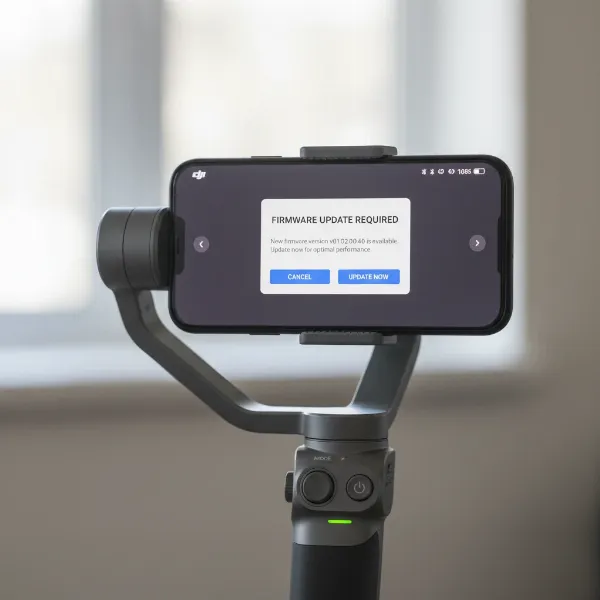 A close-up of a DJI Osmo Mobile gimbal connected to a smartphone displaying the DJI Mimo app with a firmware update notification.
Using DJI Assistant Software (for Ronin series, or PC method)
- Connect to PC: Turn on your DJI Ronin gimbal and connect it to your computer using the original USB-C cable.
- Launch Software: Open DJI Assistant for Ronin (or the appropriate DJI Assistant software for your specific gimbal) on your computer and log in to your DJI account.
- Navigate to Update Page: Click on your gimbal’s icon to enter the firmware update page. The software will refresh and display available firmware versions.
- Select and Update: Choose the desired firmware version and click “Update.” The software will download the firmware and automatically begin the installation process on your gimbal.
- Completion: The gimbal will automatically restart once the update is complete. Disconnect the USB cable after verifying the new firmware version.
How to Update Zhiyun Gimbal Firmware
Zhiyun gimbals often utilize the ZY Play mobile app for convenient updates, with some models also offering a computer-based method.
Using the ZY Play App
- Power On and Connect: Power on your Zhiyun gimbal and, for some models, put it into standby mode. On your smartphone, enable Bluetooth and open the ZY Play app. Select your product and connect to the gimbal.
- Download Firmware: If a new firmware version is available, a notice will appear in the app. Tap this notice to download the firmware package.
- Wi-Fi Connection (for some models): For certain Zhiyun models (e.g., Crane 3 LAB, Weebill LAB), after downloading the firmware, you may need to go to your phone’s WLAN settings and connect to the gimbal’s Wi-Fi network (default password is often “12345678”).
- Start Update: Return to the ZY Play app and tap “Start update” or “Upgrade Now.” The gimbal may go “limp,” and power indicators might change color during the process. This is normal.
- Restart Gimbal: Once the app confirms the update is complete, restart your Zhiyun gimbal.
Using ZUN Gimbal Tools / ZY Play Software (PC method)
- Download Firmware: Visit the official Zhiyun website and download the latest firmware file for your specific gimbal model to your computer.
- Connect to PC: Connect your Zhiyun gimbal to your computer using a USB-C cable.
- Launch Software: Open the ZUN Gimbal Tools or ZY Play software on your computer.
- Select and Upgrade: Connect to your gimbal within the software. Navigate to the firmware upgrade tab, browse to and select the downloaded firmware file. Click “Upgrade.”
- Wait for Completion: The software will upload the firmware to the gimbal. Be patient and do not disconnect the gimbal or close the software until the process is finished. The gimbal may power down after the update.
How to Update Moza Gimbal Firmware
Moza gimbals, like others, offer both app-based and computer-based firmware update procedures, often requiring the gimbal to be in a specific “Boot Mode.”
Using the MOZA Master/Genie App
- Enter Boot Mode: Turn off your Moza gimbal. To enter “Boot Mode,” typically press and hold the joystick or a specific center button, then press the power button simultaneously. The gimbal’s screen should display “Boot Mode.”
- Connect to App: Enable Bluetooth and Location services on your smartphone, then open the MOZA Master or Moza Genie app. Press the “connect” button and search for your gimbal, then select it from the device list.
- Initiate Update: The app will automatically enter the firmware upgrade interface and prompt you if an update is available. Press “Confirm” to begin the download and installation.
- Monitor Progress: The gimbal’s screen will show “Air2 firmware upgrading” (or similar) and a progress percentage.
- Restart: Once the app indicates the update is completed, disconnect your phone and restart the gimbal.
Using MOZA Master Software (PC method)
- Enter Boot Mode: Turn off the Moza gimbal. Similar to the app method, put it into “Boot Mode” by holding a specific button (e.g., joystick or center button) while powering it on. The gimbal’s screen should confirm “Boot Mode.”
- Connect to PC: Connect your Moza gimbal to your computer using a USB Type-C cable.
- Launch Software: Open the MOZA Master Software on your computer and select your gimbal model from the device list.
- Upgrade Firmware: The software will automatically open the upgrade interface. After the firmware file has been downloaded (either by the software itself or pre-downloaded by you), click the “Upgrade” button.
- Completion: The gimbal’s screen will display “Upgrading” with a progress percentage and then “Upgrade Success” upon completion. Disconnect the USB cable and reboot your gimbal.
Post-Update Checks and Troubleshooting
After updating your gimbal’s firmware, a few steps can ensure everything is working correctly and help you resolve any unexpected issues.
- Verify Firmware Version: Always double-check the firmware version in your gimbal’s menu or the companion app to confirm that the update was successful and the new version number matches the latest release.
- Test Core Functions: Record a short video, test various gimbal modes, button functionalities, and any new features introduced by the update. This ensures no glitches or crashes occurred during the installation.
- Calibrate Sensors: If the firmware update included improvements to sensors or stabilization algorithms, performing a gimbal calibration as per the manual is often recommended to optimize performance.
Common Issues and Solutions:
- Update Failure: If the update fails, restart the associated app or software, re-establish the connection to your gimbal, and try the update again. Ensure your internet connection is stable and the gimbal’s battery is adequately charged.
- Gimbal Unresponsive: If your gimbal becomes unresponsive after an update, try a force restart by holding the power button for an extended period (consult your specific model’s manual for exact instructions).
- Connection Issues: If the app or software struggles to connect to your gimbal, check your USB cables, Bluetooth/Wi-Fi settings, and try restarting both your gimbal and the connected device.
- Battery Depletion during Update: This is a critical situation and can lead to a “bricked” device. This emphasizes the importance of a fully charged battery before starting an update. If this happens, try contacting the manufacturer’s support for specialized recovery instructions.
“Always prioritize official channels for firmware downloads to ensure authenticity and avoid bricking your device. Interruption of the update process can corrupt the gimbal’s software.”
Conclusion
Keeping your DJI, Zhiyun, or Moza gimbal’s firmware updated is a vital practice for every serious content creator. It’s the gateway to enhanced performance, exciting new features, and increased reliability, ultimately empowering you to capture even more cinematic footage. By following these detailed, brand-specific instructions and adhering to essential precautions, you can confidently manage your gimbal’s software, ensuring it always operates at its peak. So, go ahead and update your gear—what new features are you most excited to unlock with your next gimbal firmware update?
Frequently Asked Questions
How often should I update my gimbal’s firmware?
It’s generally recommended to update your gimbal’s firmware as soon as an official release is available from the manufacturer. These updates often contain critical bug fixes, performance improvements, and new features that enhance your user experience and device stability.
Can I downgrade my gimbal’s firmware?
Most manufacturers do not officially support firmware downgrades due to potential compatibility issues and risks of device malfunction. It’s usually best to stick with the latest stable version. If you encounter severe issues with a new firmware, contact customer support for guidance.
What happens if my gimbal loses power during an update?
A power loss during a firmware update can corrupt the gimbal’s internal software, potentially rendering it inoperable, a state often referred to as “bricked.” This is why a high battery level (over 80%) is a crucial pre-update step. If this occurs, immediately contact the manufacturer’s support.
My app isn’t detecting an update, what should I do?
First, ensure your smartphone has a stable internet connection and that you’re using the latest version of the manufacturer’s app. Try restarting both your gimbal and the app. If the issue persists, visit the official support website for your gimbal to check for manual firmware download options or specific troubleshooting guides.