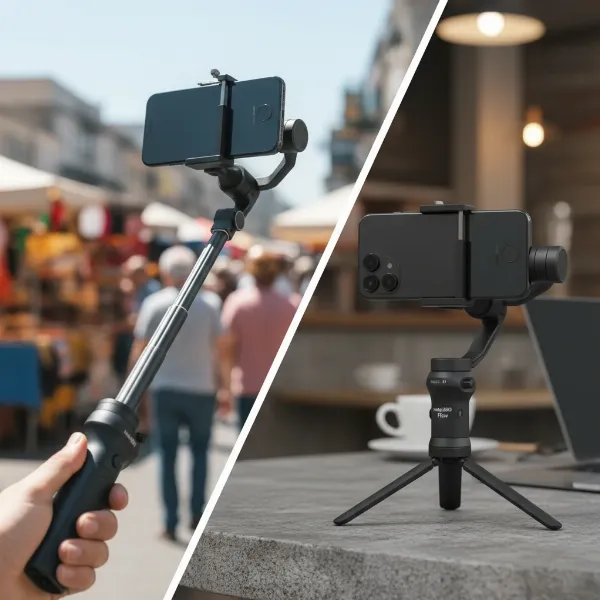
The visual landscape of music videos has evolved dramatically, pushing creative boundaries to match the dynamic energy of sound. In this high-stakes world, achieving fluid, professional-grade camera movements is not just a luxury; it’s a necessity. Enter the gimbal – a revolutionary tool that has democratized cinematic production, transforming shaky amateur footage into polished, engaging visual stories. If you’re looking to elevate your music videos from good to unforgettable, understanding how to harness the power of a gimbal for innovative effects is your ultimate playbook. This guide will walk you through the top 10 music video effects you can unlock with a gimbal, ensuring your visuals resonate with audiences and leave a lasting impression.
The Power of Gimbal Stabilization in Music Videos
Gimbals provide crucial stabilization, isolating your camera from unwanted bumps and shakes, a critical advantage in fast-paced music video production. This technology empowers filmmakers to execute complex tracking shots and dynamic movements that would otherwise require expensive and cumbersome dolly tracks or crane systems. For music videos, where energy and visual flow are paramount, a gimbal transforms ordinary camera work into a seamless dance, perfectly synchronized with the rhythm and emotion of the track.
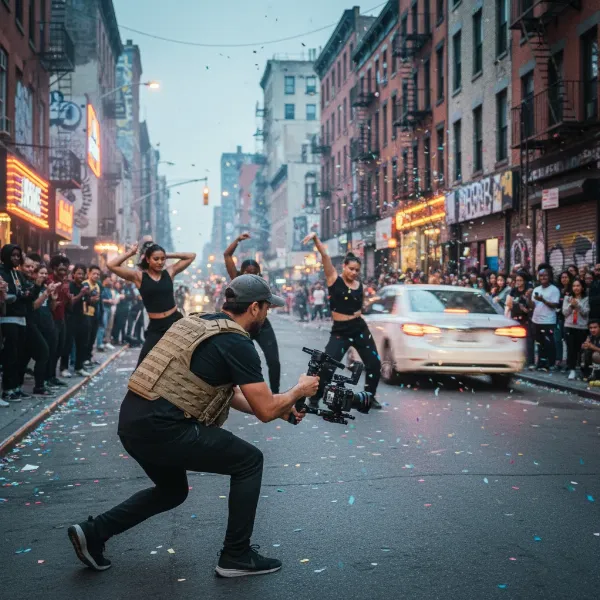 Filmmaker operating a gimbal with a camera, capturing a dynamic shot for a music video in an urban setting.
Why Gimbals Matter for Visual Storytelling
Gimbals empower videographers to achieve the smooth, flowing camera work often seen in high-budget productions. This stability is vital for creating a professional look, ensuring viewers remain immersed in the performance without distraction from jerky footage. Beyond just smooth motion, gimbals enable a freedom of movement that helps tell a more compelling visual story, allowing the camera to become an active participant in the narrative rather than a static observer. They provide the foundation for executing complex moves that enhance the mood, energy, and overall impact of your music video.
Unleashing Creative Camera Movements: Top 10 Gimbal Effects
1. The Cinematic Push-In/Pull-Out
|
Our Picks for the Best Washing Machine in 2026
As an Amazon Associate I earn from qualifying purchases.
|
||
| Num | Product | Action |
|---|---|---|
| 1 | Portable Washing Machine - Compact 2.0 Cu.ft Portable Washer, Full-Automatic Top Loader for Space Saving, Ideal for Apartments, Homes, and Dorms, 10 Wash Cycles, Low Noise, IPX4 with Drain Pump |

|
| 2 | COSTWAY Portable Washing Machine, Twin Tub 26 Lbs Capacity, 18 Lbs Washer and 8 Lbs Spinner, Compact Washer with Control Knobs, Timer Function, Drain Pump, Laundry washer for Apartment RV, Blue |
|
| 3 | Portable Washing Machine,16L Upgraded Large Capacity Portable Washer With 3 Modes Deep Cleaning.Suitable For Travel, Camping,Apartments, Dormitories, Hotels (Green) |
|
| 4 | Waterjoy Portable Washing Machines, 7.7 lbs Load Capacity Portable Washer and Dryer Combo with Built-in Barrel Light & LED Display for Household and Apartment (Blue) |
|
| 5 | Giantex Portable Washing Machine, 17.6lbs Compact Washer Spinner Combo with Pump Drain, Twin Tub 11lbs Wash & 6.6lbs Spin, Lavadoras Portatiles for Apartment RV Dorm College (White & Blue) |
|
| 6 | Giantex Portable Washing Machine, 20lbs Capacity, Twin Tub 2lbs Washer & 8lbs Spinner Combo, Compact for Apartment RV Dorms, Blue & White, GT24267-PE |
|
| 7 | COSTWAY Portable Washing Machine, Twin Tub 26lbs Capacity Laundry Washer, 18lbs Washer and 8lbs Spinner Combo with Timer Knobs, Built-in Drain Pump, Compact Washer for Home Dorm Apartment, Blue+White |
|
| 8 | Giantex Portable Washing Machine, 21lbs Capacity, 14.4lbs Washer and 6.6Llbs Spinner, Compact for Apartment RV, White & Gray, GT-GE-10390US-GR-FP |
|
| 9 | Avanti Portable Compact Washing Machine for Clothes/Laundry, 0.84 Cu. Ft. Capacity, Standard Sink/Faucet Attachment for Apartment, Dorm, RV, White |
|
| 10 | COSTWAY Portable Washing Machine, Twin Tub 26lbs Capacity Laundry, 18lbs Washer and 8lbs Spinner Combo with Timer Knobs, Built-in Drain Pump, Compact Washer for Home Dorm Apartment (Grey+White) |
|
This fundamental gimbal move mimics a classic dolly shot, gradually bringing the viewer closer to the subject (push-in) or expanding the scene to reveal more of the environment (pull-out). It’s perfect for emphasizing a lyric, drawing attention to an artist’s emotion, or establishing the mood of a new location. To execute, simply walk steadily forward or backward, keeping your subject centered, allowing the gimbal to smooth out your natural footsteps for a truly professional feel.
2. Dynamic Tracking Shots
Tracking shots are a staple in music videos, allowing the camera to follow a subject, whether from behind (follow track), in front (lead track), or alongside (side track). A gimbal makes these shots incredibly fluid, maintaining consistent distance and framing as the artist moves. These shots immerse the audience, making them feel like they’re right there with the performer, experiencing the energy and movement of the music in real-time.
3. The Orbit/Parallax Effect
A favorite for creating a dynamic, almost hypnotic feel, the orbit shot involves circling around your subject while keeping them centered in the frame. The background appears to move and shift dramatically, creating a captivating parallax effect that adds depth and visual interest. This technique is particularly effective during a chorus or instrumental break, highlighting the artist within their environment in a visually stunning way.
4. Dramatic Reveal Shots
Build suspense and visual flair by using reveal shots. Start with the camera positioned behind an object—a wall, a tree, another performer—then smoothly move the gimbal past it to unveil your subject or a new scene. This adds an element of surprise and can dramatically transition between different parts of your music video, keeping the audience engaged and eager to see what comes next.
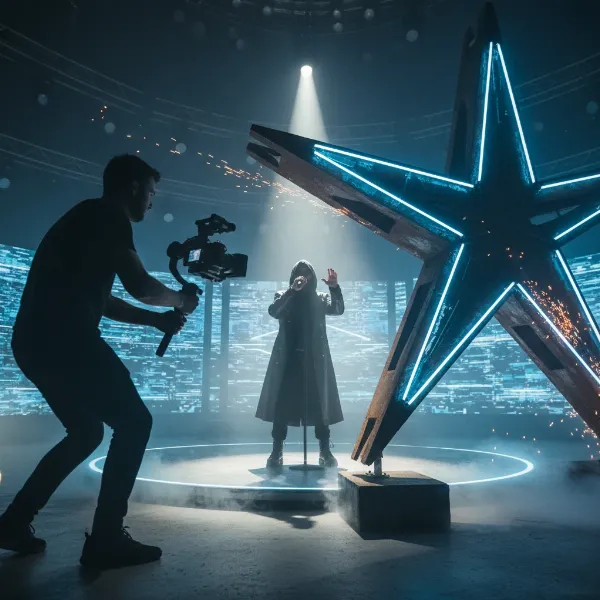 Filmmaker using a gimbal to reveal a singer behind a dramatic prop in a music video set.
5. Underslung & Low-Angle Perspectives
Flipping your gimbal into underslung (or low) mode allows you to capture incredibly dramatic low-angle shots, often just inches off the ground. This perspective can make subjects appear more powerful, larger than life, or create an intense, gritty feel. It’s excellent for capturing unique performance angles, showcasing detailed footwear, or emphasizing movement across a surface, providing an unexpected and cinematic viewpoint.
6. Smooth Crane-like Motions
While a full-sized jib or crane is costly, your gimbal can simulate similar majestic vertical movements. Start low, perhaps with bent knees, and smoothly rise upwards while tilting down slightly or maintaining a level horizon. This motion can grandly introduce a location, reveal an artist standing tall, or create a powerful sweep that captures the scale of a scene, adding a high-production value feel to your video.
7. Artistic Tilt Shots
Tilts, the vertical pan of the camera, become buttery smooth with a gimbal. A ’tilt-up’ can reveal a towering building or an artist’s face from the ground up, building anticipation. A ’tilt-down’ can transition from the sky to a detailed scene or a performer’s subtle expression. Combining tilts with push-in or pull-out movements further amplifies their impact, making them potent tools for guiding the viewer’s eye and enhancing emotional weight.
8. Whip Pan Transitions
For an energetic and dynamic transition between scenes or shots, the whip pan is your go-to. A quick, deliberate pan to the left or right, blurring the footage, allows for seamless cuts in editing. With a gimbal, your whip pans will be exceptionally smooth and controlled, making the transition feel intentional and stylistic, rather than jarring. This effect is perfect for fast-paced sequences or to match a sudden beat drop in the music.
9. The “Fake” Drone Shot
Achieve impressive elevated and sweeping shots without the need for an actual drone. By starting close to your subject at ground level and slowly pulling back while simultaneously raising your gimbal high overhead, you can create a smooth, ascending shot that mimics the grandeur of aerial footage. This effect is fantastic for establishing shots, grand exits, or simply adding a breathtaking, expansive feel to your music video.
10. Freestyle & Dynamic Close-ups
A gimbal liberates your camera, allowing for fluid, freestyle movements around your subject. This freedom is invaluable for dynamic close-ups, letting you hover, push in, pull out, and weave around the artist to capture intricate details, intense emotions, or energetic performance elements with unprecedented smoothness. These intimate yet dynamic shots can bring viewers closer to the artist, making the connection more personal and impactful.
Mastering Your Gimbal for Professional Results
Achieving truly professional music video effects with your gimbal goes beyond just knowing the moves; it requires careful preparation and practice.
Balancing and Calibration Essentials
Before every shoot, ensure your camera is perfectly balanced on your gimbal. Proper balancing is crucial for smooth operation, preventing motor strain, and extending battery life. Take the time to calibrate your gimbal according to the manufacturer’s instructions. A well-balanced and calibrated gimbal is the foundation for any successful cinematic shot.
Practicing Your Moves
Like any skill, mastering gimbal operation requires practice. Rehearse each move multiple times, focusing on smooth starts and stops, consistent speed, and precise framing. Experiment with different walking styles, such as the “Ninja Walk” (bending knees and staying low), to minimize vertical bobbing and achieve the most fluid motion. Consistency is key to creating compelling visual effects.
Integrating with Music and Editing
Always shoot with your music video’s final edit in mind. Consider how each gimbal shot will cut together with the others and how it will sync with the rhythm and mood of the song. Over-shooting is better than under-shooting; capture various takes and angles for flexibility in post-production. The magic often happens in the edit, where you can further enhance your gimbal footage with speed ramps, color grading, and visual effects to create truly unique results.
Gimbal Maintenance and Best Practices
To ensure your gimbal remains a reliable tool for creating stunning music video effects, consistent care is essential.
Keeping Your Gimbal Ready for Action
Regularly clean your gimbal, especially around the motors and axes, to prevent dust and debris from interfering with its operation. Store it in its protective case when not in use to shield it from impacts and environmental elements. Periodically check for any loose screws or connections, and keep its firmware updated to benefit from the latest features and performance improvements. A well-maintained gimbal will consistently deliver the smooth, cinematic footage your music videos deserve.
“A gimbal isn’t just a stabilizer; it’s an extension of the filmmaker’s eye, allowing us to choreograph camera movements that resonate with the very soul of the music.” – Alex Chen, Award-winning Music Video Director
Conclusion
Gimbals are undeniable game-changers in music video production, offering an accessible pathway to professional, dynamic visuals. By mastering effects like the Push-In, Orbit, and Crane-like motions, you unlock a universe of creative possibilities, transforming ordinary scenes into captivating visual narratives. Your ability to wield this tool with precision and artistic vision will directly translate into music videos that not only look incredible but also deeply connect with your audience. So, grab your gimbal, practice these techniques, and start crafting the next generation of iconic music video moments. What new visual stories will you tell with the power of stabilized motion?
Frequently Asked Questions
Which gimbal is best for music video production?
The “best” gimbal depends on your camera setup (smartphone, mirrorless, DSLR) and budget. Popular choices include the DJI RS series (for larger cameras) and DJI Osmo Mobile series (for smartphones) due to their robust features and reliable stabilization. Research user reviews and compatibility with your specific camera gear.
How can I make my gimbal footage even smoother?
Beyond proper balancing and calibration, practice the “Ninja Walk” or “Zombie Walk” technique to minimize body bounce. Using a wider lens can also make slight imperfections less noticeable. Experiment with your gimbal’s follow speeds and deadbands to find settings that suit your movement style and desired effect.
Can I achieve professional music video effects with a smartphone gimbal?
Absolutely! Modern smartphone gimbals offer incredible stabilization and smart features like active tracking, motion time-lapse, and various follow modes. Combined with a good smartphone camera and creative application of the effects listed above, you can produce highly cinematic music videos that defy their modest equipment.