In today’s visually driven world, the demand for compelling video content has skyrocketed. Whether showcasing a luxury home or capturing the fleeting emotions of a wedding day, smooth, cinematic footage elevates the viewing experience, making it more immersive and memorable. For aspiring and seasoned videographers alike, a gimbal is no longer just a luxury accessory; it’s a fundamental tool that transforms ordinary shots into professional-grade productions. If you own a gimbal and are looking to monetize your skills, this comprehensive guide will walk you through leveraging your equipment to build a profitable career in the thriving real estate and wedding videography markets.
Understanding Your Tool: The Modern Gimbal
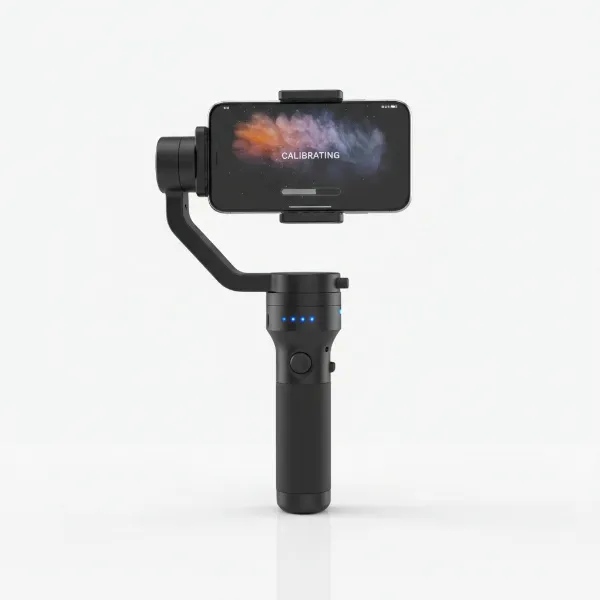
A gimbal is a motorized camera stabilizer that uses intelligent sensors and brushless motors to keep your camera perfectly level and smooth across all three axes, regardless of your movement. This technology eliminates shaky footage, allowing for fluid, professional-looking shots that are otherwise impossible to achieve handheld.
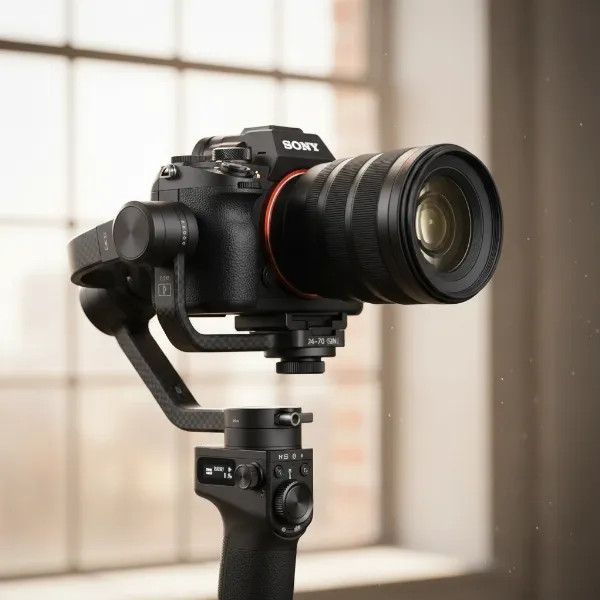 A professional camera mounted on a modern three-axis gimbal stabilizer.
Gimbals come in various forms, catering to different camera setups and use cases. Smartphone gimbals are compact and user-friendly, ideal for mobile content creators and entry-level professionals. DSLR and mirrorless camera gimbals, such as the DJI RS series or Zhiyun Weebill models, offer greater payload capacity and advanced features for larger camera systems. For high-end productions, professional cinema gimbals handle heavier rigs, providing unparalleled stability. Key features to consider when working with a gimbal include its payload capacity (how much weight it can carry), battery life for extended shoots, and versatile shooting modes (e.g., pan follow, tilt follow, all-locked) that enable diverse creative movements.
Mastering the Craft: Essential Skills for Gimbal Operators
Owning a gimbal is just the first step; mastering its operation and understanding the art of cinematic storytelling are crucial for success. Technical proficiency ensures your footage is flawless, while creative vision transforms raw shots into compelling narratives.
Effective gimbal operation goes beyond just turning it on. You must learn how to balance your camera correctly to prevent motor strain and ensure optimal performance. Techniques like the “ninja walk” or “duck walk”—a smooth, low gait that minimizes body bounce—are vital for achieving truly stable footage while moving. Practicing different gimbal movements, such as orbiting, tracking shots, and subtle pans and tilts, will expand your creative repertoire. Beyond technical execution, cinematic storytelling involves understanding composition, lighting principles, and how to effectively guide a viewer’s eye. This includes framing subjects dynamically, using natural light to your advantage, and planning your shots to convey emotion and flow. Finally, strong post-production skills are essential. Knowing how to edit your gimbal footage for maximum impact, apply color grading to create a consistent look, and ensure clear, crisp audio will polish your final product and set you apart from the competition.
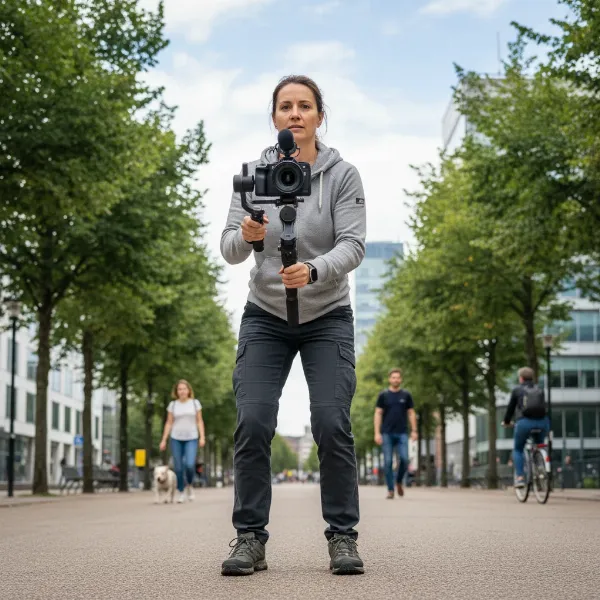 A videographer performs a smooth tracking shot with a camera on a gimbal outdoors.
The Real Estate Market: Capturing Properties with Professional Flair
The real estate industry is ripe for videographers who can deliver high-quality visual content. In a competitive market, cinematic property tours help listings stand out, attracting more potential buyers and driving faster sales.
Gimbals are indispensable for creating immersive virtual walkthroughs that allow prospective buyers to experience a property as if they were physically there. Smooth, flowing camera movements guide viewers seamlessly from room to room, highlighting architectural details and the overall ambiance. This technique creates a stronger emotional connection to the space, helping buyers envision themselves living there.
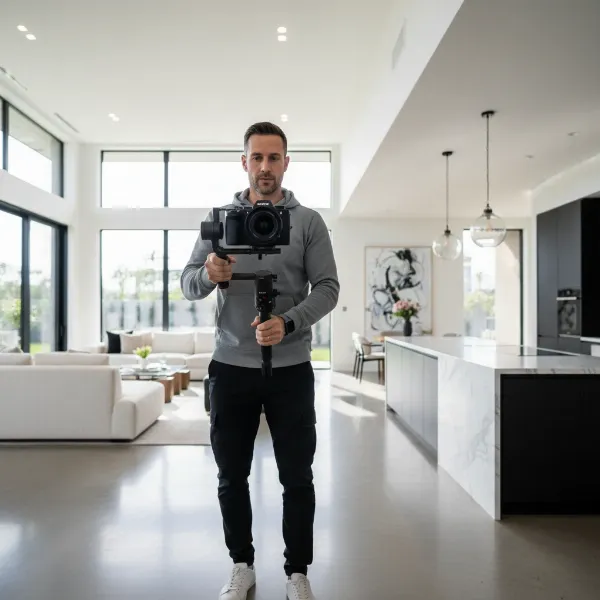 A videographer using a gimbal to film a smooth walkthrough inside a modern house.
When shooting real estate, focus on interior walkthroughs that emphasize spatial relationships and key features, as well as exterior shots that showcase curb appeal, landscaping, and the surrounding environment. Integrating drone footage as an add-on can provide stunning aerial views, offering a comprehensive perspective of the property and its location.
Targeting the right clients is vital in real estate videography. While entry-level properties might have smaller budgets, the luxury market often seeks premium video services and is willing to invest significantly for exceptional marketing content. Offering comprehensive packages that combine high-quality photos, drone videography, virtual tours, and cinematic property walkthroughs can increase your value proposition. When scripting effective real estate videos, start with an engaging introduction that sets the scene, highlight 3-5 main selling features of the home, and conclude with a clear call to action, such as visiting an open house or contacting the agent.
 A drone captures a stunning aerial view of a luxurious suburban house and its landscape.
The Wedding Industry: Crafting Unforgettable Cinematic Memories
Weddings are monumental life events, and couples increasingly seek professional videographers to capture their special day in a cinematic and emotionally resonant way. A gimbal is a cornerstone tool for achieving the polished, dynamic footage that defines modern wedding videography.
Gimbals are crucial for capturing the dynamic, often fast-paced moments of a wedding smoothly and elegantly. From the bride walking down the aisle to the first dance, a gimbal allows you to move with the action without jarring camera shakes, creating fluid and beautiful sequences that become cherished memories. Wedding videography demands an ability to blend into the background while still capturing intimate moments, telling an emotional narrative from preparation to celebration. Utilizing slow-motion footage (shot at 60fps or 120fps) is particularly effective in weddings, allowing you to draw out poignant moments and add a dramatic, dreamy quality to key scenes, like a loving glance or the toss of a bouquet.
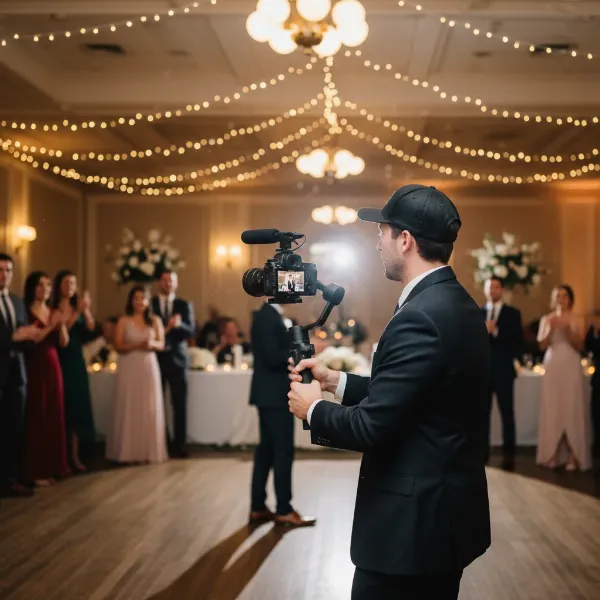 A professional wedding videographer using a gimbal to capture a dynamic moment during a wedding ceremony.
Building a strong wedding portfolio is paramount. Many videographers start by offering to shoot weddings for friends or family, or even assisting established professionals for free, to gain experience and build a reel. This approach helps you gather testimonials and showcase your emotional storytelling capabilities. Networking within the wedding industry—connecting with photographers, planners, and venues—can open doors to consistent work. When pricing your wedding services, consider offering tiered packages that include varying hours of coverage, multiple videographers, and add-ons like drone footage, highlight reels, or full-length ceremony edits. Remember to factor in your expertise, equipment investment, and extensive editing time to ensure fair compensation for your invaluable work.
Building Your Videography Business: From Passion to Profit
Transitioning from a hobbyist with a gimbal to a professional videographer requires not only technical skill but also a solid business foundation. This involves investing in the right gear, building a compelling portfolio, and implementing effective marketing strategies.
Beyond your gimbal, essential gear for a professional videographer includes reliable camera bodies (DSLR or mirrorless), a versatile set of lenses (wide-angle for interiors, telephoto for details), high-quality audio equipment (wireless lavalier mics, shotgun mics), and portable lighting solutions. Robust editing software like Adobe Premiere Pro or DaVinci Resolve is also critical for post-production.
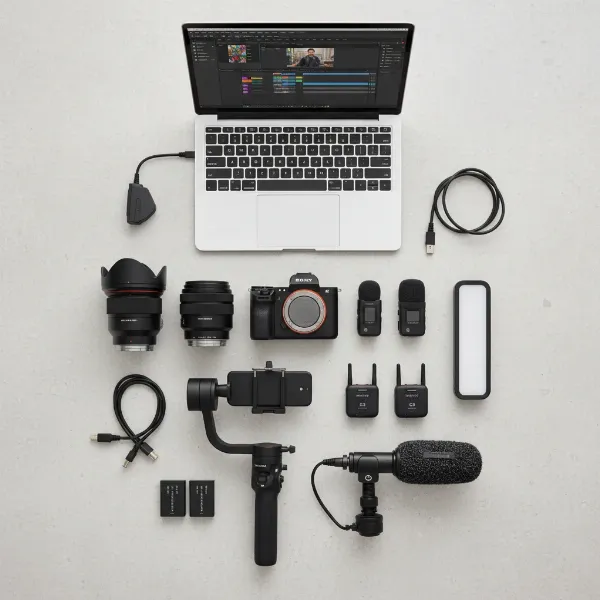 A complete professional videography kit including camera, lenses, gimbal, audio, and lighting equipment.
Creating a standout portfolio is your most powerful marketing tool. It should showcase your best gimbal work, featuring niche-specific examples for both real estate and weddings. Consider creating a dedicated website or a professional Vimeo/YouTube channel to display your work prominently.
Effective marketing and client acquisition strategies include leveraging referrals from satisfied clients and industry partners. Cold outreach, whether through tailored emails or phone calls, can be effective if you clearly articulate how your services solve a potential client’s specific needs. Building a strong online presence through social media, a professional website, and local SEO will increase your visibility. Establishing personal branding that communicates your unique style and professionalism is also key. On the business side, ensure you set up a legal structure (e.g., sole proprietorship, LLC), draft clear contracts for all services, and secure adequate business insurance to protect yourself and your equipment.
 A professional videographer reviewing their online portfolio and marketing strategies on a laptop.
Maximizing Your Earning Potential & Avoiding Pitfalls
To truly thrive as a gimbal videographer, focus on continuously enhancing your services and strategically navigating the market. Longevity in this field comes from delivering consistent quality and smart business practices.
One of the best ways to maximize your earning potential is by diversifying your services. Beyond core videography, consider offering drone photography and videography, advanced virtual tours, or even complementary photography services, as many real estate agents and wedding clients prefer a single media provider.
Continuous learning is non-negotiable; stay updated with the latest gimbal technology, camera trends, and video editing techniques to remain competitive. Regularly consume industry tutorials, workshops, and online courses. Crucially, manage client expectations through clear communication about deliverables, timelines, and revisions. This prevents misunderstandings and fosters positive client relationships. Lastly, be aware of the “race to the bottom” in certain markets, especially in lower-end real estate. Avoid undervaluing your work by focusing on quality, specialized services, and targeting clients who appreciate and are willing to pay for professional expertise.
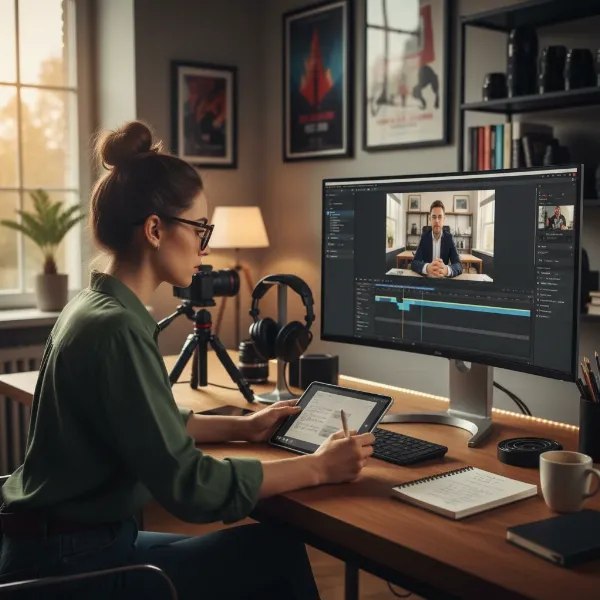 A videographer actively engaged in a workshop or online course, learning new video techniques.
Conclusion
Your gimbal is more than just a piece of equipment; it’s a gateway to a rewarding and creative career in videography. By mastering your craft, strategically targeting the real estate and wedding markets, and building a robust business foundation, you can transform your passion for smooth, cinematic footage into a profitable enterprise. The demand for high-quality video is only growing, offering endless opportunities for skilled gimbal operators. Are you ready to stabilize your future and capture the moments that matter most?
Frequently Asked Questions
What’s the best gimbal for beginners getting into real estate and wedding videography?
|
Our Picks for the Best Washing Machine in 2026
As an Amazon Associate I earn from qualifying purchases.
|
||
| Num | Product | Action |
|---|---|---|
| 1 | Portable Washing Machine - Compact 2.0 Cu.ft Portable Washer, Full-Automatic Top Loader for Space Saving, Ideal for Apartments, Homes, and Dorms, 10 Wash Cycles, Low Noise, IPX4 with Drain Pump |

|
| 2 | Giantex Portable Washing Machine, 17.6lbs Compact Washer Spinner Combo with Pump Drain, Twin Tub 11lbs Wash & 6.6lbs Spin, Lavadoras Portatiles for Apartment RV Dorm College (White & Blue) |
|
| 3 | COSTWAY Portable Washing Machine, Twin Tub 26lbs Capacity Laundry, 18lbs Washer and 8lbs Spinner Combo with Timer Knobs, Built-in Drain Pump, Compact Washer for Home Dorm Apartment (Grey+White) |
|
| 4 | Waterjoy Portable Washing Machines, 7.7 lbs Load Capacity Portable Washer and Dryer Combo with Built-in Barrel Light & LED Display for Household and Apartment (Blue) |
|
| 5 | COSTWAY Portable Washing Machine, Twin Tub 26lbs Capacity Laundry Washer, 18lbs Washer and 8lbs Spinner Combo with Timer Knobs, Built-in Drain Pump, Compact Washer for Home Dorm Apartment, Blue+White |
|
| 6 | Avanti Portable Compact Washing Machine for Clothes/Laundry, 0.84 Cu. Ft. Capacity, Standard Sink/Faucet Attachment for Apartment, Dorm, RV, White |
|
| 7 | Giantex Portable Washing Machine, 20lbs Capacity, Twin Tub 2lbs Washer & 8lbs Spinner Combo, Compact for Apartment RV Dorms, Blue & White, GT24267-PE |
|
| 8 | COSTWAY Portable Washing Machine, Twin Tub 26 Lbs Capacity, 18 Lbs Washer and 8 Lbs Spinner, Compact Washer with Control Knobs, Timer Function, Drain Pump, Laundry washer for Apartment RV, Blue |
|
| 9 | Giantex Portable Washing Machine, 21lbs Capacity, 14.4lbs Washer and 6.6Llbs Spinner, Compact for Apartment RV, White & Gray, GT-GE-10390US-GR-FP |
|
| 10 | Portable Washing Machine,16L Upgraded Large Capacity Portable Washer With 3 Modes Deep Cleaning.Suitable For Travel, Camping,Apartments, Dormitories, Hotels (Green) |
|
For beginners, versatile and user-friendly options like the DJI RS 3 Mini or the Zhiyun Weebill 3 are excellent choices. They offer a good balance of payload capacity, stabilization performance, and ease of use without being overly complex, providing a solid foundation for learning and professional growth.
How much can I charge for real estate videos?
Pricing for real estate videos varies widely based on location, property size, video length, and included services (e.g., drone footage, photography). While some videographers might charge $150-$350 for basic home tours, luxury properties can command $1,500 to upwards of $5,000, especially when bundled with extensive photography and drone work.
Do I need a drone for real estate videography?
While not always strictly necessary for every listing, a drone is highly recommended, especially for luxury properties or homes with significant exterior features. Drone footage provides unique aerial perspectives that showcase the property’s scale, surroundings, and curb appeal, adding significant value and appeal to your services.
How do I find my first clients for gimbal videography?
Start by building a strong portfolio, even if it means shooting for free for friends, family, or local businesses to gain experience. Leverage referrals from your network, reach out to real estate agents and wedding planners directly, and establish an online presence with a professional website and active social media profiles to showcase your work.
Can I use a smartphone gimbal for professional work in these niches?
Yes, for certain entry-level real estate videos or behind-the-scenes wedding content, a high-quality smartphone gimbal (like the Zhiyun Smooth 5S AI) paired with a modern smartphone can deliver surprisingly professional results. Many real estate agents even produce their own listing videos with smartphones, making this a viable starting point to demonstrate skill before investing in higher-end camera equipment.