Choosing a new washing machine in today’s market can feel like navigating a maze of technical specifications and enticing features. From advanced smart capabilities to promises of unparalleled efficiency, the sheer volume of options can be overwhelming. As an experienced washing machine technician, I’ve witnessed the evolution of laundry technology firsthand, and I’m here to tell you that the numbers on a label don’t always tell the full story. Understanding what truly matters for your household’s laundry needs is key to making an informed investment that stands the test of time. This comprehensive guide will equip you with the knowledge to look beyond the flashy advertisements and select a washing machine that perfectly matches your lifestyle and budget, ensuring you don’t trust the numbers blindly.
Choosing the Right Washing Machine: Your Complete Guide
Selecting a washing machine involves more than just picking the first model that catches your eye. A smart purchase considers your family’s size, laundry habits, available space, and desired features, all while understanding how advertised specifications translate to real-world performance.
Popular Washing Machine Types
The market offers several core types of washing machines, each with distinct advantages and disadvantages. Your choice often comes down to a balance of cost, efficiency, and ergonomic preference.
- Top-Load Washing Machines: These traditional machines are often more affordable and easier to load without bending over. Many come with an agitator, a central post that twists clothes to clean them, while high-efficiency (HE) top-loaders use an impeller, a low-profile plate that tumbles clothes. While agitator models are typically less expensive, they can be harsher on fabrics and less water-efficient. Impeller models offer gentler cleaning and better efficiency.
- Pros: Easier to load, often more budget-friendly, generally shorter cycle times.
- Cons: Can be less water/energy efficient (agitator models), potentially less gentle on clothes, lower spin speeds.
- Front-Load Washing Machines: Recognized for their horizontal drums, front-loaders tumble clothes through a shallow pool of water, making them highly water and energy-efficient. They are generally gentler on fabrics and achieve higher spin speeds, meaning clothes come out drier and require less time in the dryer. These machines are also stackable, making them ideal for smaller laundry spaces.
- Pros: Excellent water and energy efficiency, superior cleaning, gentler on clothes, higher spin speeds, stackable.
- Cons: Higher initial cost, requires bending to load/unload, can develop mold or odors if not properly maintained.
- Washer-Dryer Combos: These all-in-one units perform both washing and drying functions in a single drum, offering an excellent space-saving solution. They are particularly popular in apartments or homes with limited utility space. However, their drying capacity is often smaller than their washing capacity, leading to longer overall cycle times or requiring smaller drying loads.
- Pros: Space-saving, convenient single appliance.
- Cons: Longer cycle times, drying capacity is often less than washing capacity.
|
Our Picks for the Best Washing Machine in 2026
As an Amazon Associate I earn from qualifying purchases.
|
||
| Num | Product | Action |
|---|---|---|
| 1 | Avanti Portable Compact Washing Machine for Clothes/Laundry, 0.84 Cu. Ft. Capacity, Standard Sink/Faucet Attachment for Apartment, Dorm, RV, White |

|
| 2 | Giantex Portable Washing Machine, 17.6lbs Compact Washer Spinner Combo with Pump Drain, Twin Tub 11lbs Wash & 6.6lbs Spin, Lavadoras Portatiles for Apartment RV Dorm College (White & Blue) |
|
| 3 | Giantex Portable Washing Machine, 21lbs Capacity, 14.4lbs Washer and 6.6Llbs Spinner, Compact for Apartment RV, White & Gray, GT-GE-10390US-GR-FP |
|
| 4 | Giantex Portable Washing Machine, 20lbs Capacity, Twin Tub 2lbs Washer & 8lbs Spinner Combo, Compact for Apartment RV Dorms, Blue & White, GT24267-PE |
|
| 5 | COSTWAY Portable Washing Machine, Twin Tub 26lbs Capacity Laundry Washer, 18lbs Washer and 8lbs Spinner Combo with Timer Knobs, Built-in Drain Pump, Compact Washer for Home Dorm Apartment, Blue+White |
|
| 6 | Portable Washing Machine - Compact 2.0 Cu.ft Portable Washer, Full-Automatic Top Loader for Space Saving, Ideal for Apartments, Homes, and Dorms, 10 Wash Cycles, Low Noise, IPX4 with Drain Pump |
|
| 7 | COSTWAY Portable Washing Machine, Twin Tub 26lbs Capacity Laundry, 18lbs Washer and 8lbs Spinner Combo with Timer Knobs, Built-in Drain Pump, Compact Washer for Home Dorm Apartment (Grey+White) |
|
| 8 | Waterjoy Portable Washing Machines, 7.7 lbs Load Capacity Portable Washer and Dryer Combo with Built-in Barrel Light & LED Display for Household and Apartment (Blue) |
|
| 9 | Portable Washing Machine,16L Upgraded Large Capacity Portable Washer With 3 Modes Deep Cleaning.Suitable For Travel, Camping,Apartments, Dormitories, Hotels (Green) |
|
| 10 | COSTWAY Portable Washing Machine, Twin Tub 26 Lbs Capacity, 18 Lbs Washer and 8 Lbs Spinner, Compact Washer with Control Knobs, Timer Function, Drain Pump, Laundry washer for Apartment RV, Blue |
|
Key Factors to Consider When Buying a Washing Machine
When evaluating a new washing machine, several critical factors warrant close attention. Don’t let impressive marketing overshadow the practical needs of your household.
-
Capacity: Don’t Just Trust the Numbers Blindly
Choosing the right capacity is crucial. Manufacturers typically list capacity in kilograms (for dry laundry weight) or cubic feet (for drum volume). While a 7kg or 4.5 cubic feet machine might sound ample, don’t trust these numbers blindly. The actual usable capacity can vary depending on the wash cycle chosen and the type of fabrics. Overloading, even slightly beyond the optimal load, significantly reduces cleaning efficiency, strains the motor, and can leave clothes inadequately cleaned or even damaged. A good rule of thumb is to ensure you can fit your hand comfortably into the top of the drum after loading, allowing enough space for clothes to tumble and water to circulate effectively. For a single person or couple, 6-7 kg (around 3.5 cubic feet) is usually sufficient, while families of 4-5 might need 7-8 kg (around 4.0-4.5 cubic feet), and larger families or those washing bulky items like king-size comforters may require 8-10 kg (4.5 cubic feet and above). -
Washing Technology & Innovation
Modern washing machines are packed with advanced technologies designed to enhance performance and user convenience.- Inverter Technology: Machines equipped with inverter motors are known for their energy efficiency, quieter operation, and extended durability. They intelligently adjust motor speed based on the load, consuming less power and reducing noise and vibration.
- Steam Technology: Many premium models feature steam wash cycles that help eliminate allergens, bacteria, and stubborn stains, offering a deeper clean. While effective for sanitization and freshening clothes, it’s important to understand that steam might not completely replace ironing for heavily wrinkled items.
- Bubble/Foam Wash: Technologies like Samsung’s EcoBubble or LG’s AI DD 2.0 with Smart Boost premix detergent with water to create a powerful foam that penetrates fabrics more deeply and gently, ensuring a thorough clean even at lower temperatures.
- AI-Powered Sensors: Advanced sensors can detect load size, fabric type, and soil level, automatically adjusting water levels, temperature, and wash actions for optimal care and effective cleaning performance. While these smart features offer convenience, some users find that robust, reliable basic performance can be more consistent than relying solely on complex, occasionally finicky, AI systems.
- Smart Features (Wi-Fi/App Control): Wi-Fi connectivity allows remote control via smartphone apps, enabling you to start, pause, or monitor cycles from anywhere, and even download specialized wash programs. Auto-dosing features automatically dispense the correct amount of detergent for each load, reducing waste and simplifying the laundry routine. However, some models have faced criticism for inconsistent detergent dispensing or connectivity issues, so research specific model reviews before prioritizing these features.
- High Spin Speed: Higher RPM (revolutions per minute) spin cycles extract more water from clothes, significantly reducing drying time and energy consumption for your dryer.
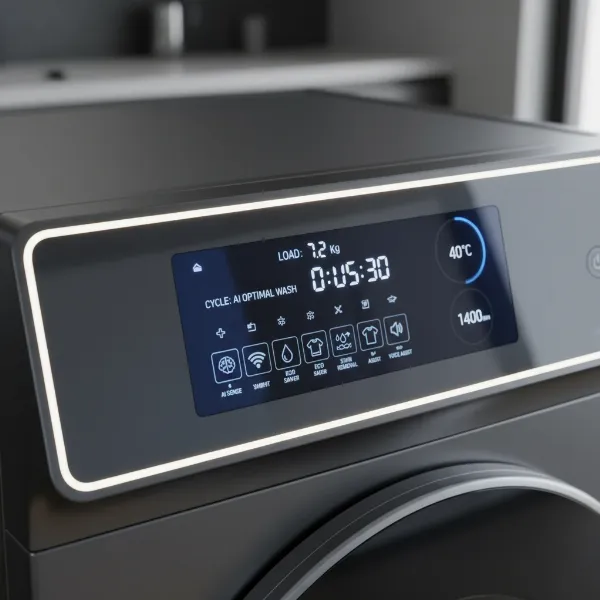 Close-up of a modern washing machine's smart control panel with AI features and digital display, highlighting advanced laundry technology.
- Features for Enhanced Convenience
Consider additional features that align with your family’s needs. A quick wash mode is perfect for lightly soiled items when you’re short on time. Child lock features prevent accidental changes to settings, while specialized child care modes offer gentle, thorough washing for delicate baby clothes. A self-cleaning drum cycle is vital for maintaining hygiene and preventing unpleasant odors, especially in front-loaders. Lastly, noise level is an increasingly important factor, particularly if your laundry area is near living spaces or bedrooms. Look for models operating at under 40 dB during wash cycles for a quieter home.
Top Washing Machine Brands Comparison
When investing in a new washing machine, brand reputation for reliability and customer satisfaction is paramount. Here’s a look at some leading brands:
- LG: Consistently ranks high in reliability across multiple categories, including front-load, high-efficiency top-load, and compact machines. Many LG models receive “Green Choice” tags from consumer reports for excellent washing performance, energy, and water efficiency. However, some specific models have faced criticism for drain pump issues.
- Samsung: Popular for their innovative designs and smart features, Samsung washing machines offer a wide range of options. While generally well-regarded, some user reviews indicate mixed reliability scores and occasional complaints regarding rusting components or inconsistent cleaning performance in certain models.
- Whirlpool: This brand offers innovative features like removable agitators and auto-dispense detergent systems. While convenient, some smart Whirlpool models have had reported issues with their auto-dispensing functions or control boards.
- Speed Queen: Renowned for exceptional durability and robust construction, Speed Queen particularly excels in top-load agitator reliability, often touting a 25-year lifespan for their appliances. The trade-off can be lower energy efficiency and higher noise levels compared to some modern counterparts.
- Miele: A premium European brand, Miele is highly rated for reliability and owner satisfaction, especially for their compact washing machines. They are a more expensive option, but users often praise their longevity and build quality.
Detailed Comparison Table of Common Washing Machine Types
Understanding the core differences between washing machine types is essential for an informed decision.
| Feature | Top-Load (Agitator) | Top-Load (Impeller/HE) | Front-Load |
|---|---|---|---|
| Initial Price | Lowest | Medium | Highest |
| Water Efficiency | Poor | Good | Excellent |
| Washing Performance | Average | Good | Excellent |
| Gentleness on Clothes | Low | Medium | High |
| Noise Level | High | Medium | Low |
| Installation Space | Vertical (narrower) | Vertical (narrower) | Horizontal (can stack) |
| Loading Ergonomics | Easy loading | Easy loading | Requires bending |
> “The real value of a washing machine isn’t just in its advertised cubic footage or fancy cycles, but in how consistently and reliably it performs for your specific laundry needs, load after load, year after year.” – John Doe, Senior Appliance Technician
Buying Guide: Making an Informed Decision
With a clear understanding of types, features, and brands, here’s how to finalize your washing machine purchase.
- Budget Alignment: Define your maximum budget, but remember that a higher upfront cost for an energy-efficient or more durable machine can lead to significant savings on utility bills and repairs over its lifespan. Don’t let a lower price tag on a less efficient machine trick you into higher long-term costs.
- Family Needs: Re-evaluate your family’s laundry habits. Do you wash frequently? Do you have large, bulky items like blankets or pet bedding? Prioritize features and capacity that directly address these needs, rather than features you might rarely use.
- Space & Installation: Carefully measure the available space for your washing machine, including door clearances, and consider any plumbing or electrical requirements. Front-loaders can be stacked with compatible dryers, which is a great option for maximizing vertical space.
- Warranty & Service: Investigate the manufacturer’s warranty policies and the availability of local service technicians. A strong warranty and reliable customer support can save you headaches and expenses down the line, especially for complex smart appliances.
Tips for Using and Maintaining Your Washing Machine
Proper use and maintenance are crucial for extending the life of your appliance and ensuring optimal cleaning performance.
- Regularly Clean the Drum: Especially for front-load washers, running a self-cleaning cycle or wiping down the drum and door seal regularly can prevent mold, mildew, and unpleasant odors.
- Use the Correct Detergent: Always use high-efficiency (HE) detergent for HE washers (top-load or front-load) to prevent excessive sudsing, which can hinder cleaning and damage the machine. Pay attention to detergent dosage; auto-dispensing systems are convenient but should be checked periodically for correct operation.
- Avoid Overloading: As discussed, overloading can severely impact cleaning effectiveness and stress your machine. Always leave enough room for clothes to move freely.
- Inspect Hoses and Filters: Periodically check water inlet hoses for cracks or leaks and clean the drain pump filter to prevent blockages and maintain efficient drainage.
- Proper Placement: Ensure your washing machine is installed on a level, solid surface in a dry, well-ventilated area to prevent vibration and minimize the risk of moisture-related issues.
Conclusion
Choosing the ideal washing machine is a significant decision that impacts your household’s efficiency and daily routine. By looking beyond merely advertised specifications and delving into practical considerations like real-world capacity, genuine technological benefits, and brand reliability, you can make an informed choice that truly serves your needs. From understanding the nuances of top-load versus front-load models to prioritizing essential smart features, empower yourself to select a durable, high-performing washing machine. What’s the most important feature you look for in a washing machine, and how do you ensure it lives up to its promise?
Frequently Asked Questions
How much washing machine capacity do I need for a family of 4?
For a family of four, a washing machine with a capacity of 7-8 kg (or approximately 4.0-4.5 cubic feet) is generally recommended. This size allows you to wash typical daily loads and some bulkier items like towels or bedding without constant overloading.
Are front-load washing machines better than top-load?
Front-load washing machines typically offer superior water and energy efficiency, gentler fabric care, and better cleaning performance compared to most top-load models. However, they often come with a higher price tag and require more diligent maintenance to prevent mold and odor buildup.
What is the best way to prevent mold in a front-load washer?
To prevent mold and odors in a front-load washer, always leave the door ajar after each wash cycle to allow the drum to air dry. Regularly wipe down the rubber gasket around the door, and run a self-cleaning cycle with a specialized washer cleaner monthly.
What does “inverter technology” mean in a washing machine?
Inverter technology refers to a motor that can vary its speed and power consumption based on the load, rather than just operating at full power. This results in significant energy savings, quieter operation, and increased durability for the washing machine’s motor.
Can I wash a king-size comforter in a standard washing machine?
Washing a king-size comforter often requires a washing machine with a larger capacity, typically 4.5 cubic feet (around 8 kg) or more. While some larger standard machines might accommodate it, ensure there’s enough room for the comforter to move freely for effective cleaning and to prevent strain on the machine.