Experiencing a “Motor Overload” error on your Zhiyun or DJI gimbal can be incredibly frustrating, especially when you’re geared up to capture that perfect shot. This common issue signals that your gimbal’s motors are struggling under excessive strain, preventing smooth stabilization and potentially damaging your equipment. Rather than letting a minor glitch derail your creative flow, understanding the root causes and applying effective troubleshooting steps can quickly get you back to filming. This comprehensive guide will walk you through diagnosing and resolving motor overload errors, along with crucial tips for prevention, ensuring your gimbal operates flawlessly for years to come.
Understanding Gimbal Motor Overload
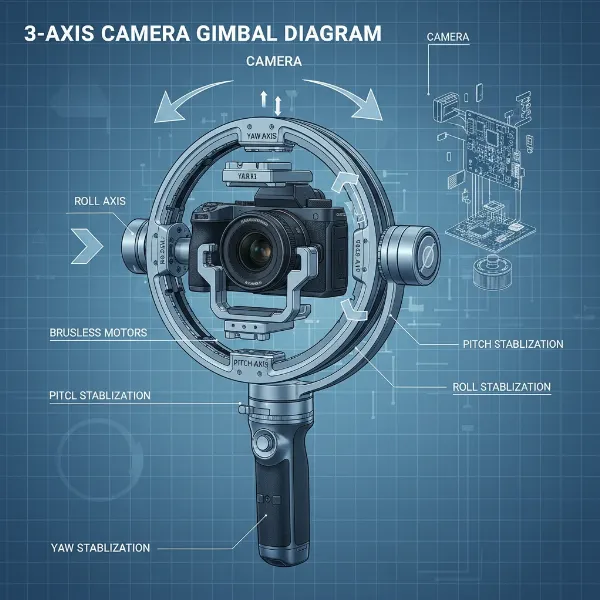
At its core, a gimbal motor overload warning indicates that one or more of your gimbal’s stabilizing motors are being pushed beyond their operational limits. Gimbals rely on a sophisticated system of brushless motors and sensors to counteract unwanted movements, providing buttery-smooth footage. When these motors encounter too much resistance, whether from physical obstruction, improper balance, or an internal malfunction, they draw excessive current, leading to an “overload” error. This is a protective measure designed to prevent the motors from burning out, but it also means your gimbal cannot function correctly until the issue is addressed. Recognizing this signal early is key to maintaining your equipment’s longevity and performance.
Common Causes of Motor Overload on Gimbals
Before diving into solutions, identifying why your gimbal is struggling can save you time and prevent recurrence. Several factors, from simple oversight to more complex issues, can trigger a “Motor Overload” error on both Zhiyun and DJI gimbals.
Physical Obstructions
|
Our Picks for the Best Washing Machine in 2026
As an Amazon Associate I earn from qualifying purchases.
|
||
| Num | Product | Action |
|---|---|---|
| 1 | Avanti Portable Compact Washing Machine for Clothes/Laundry, 0.84 Cu. Ft. Capacity, Standard Sink/Faucet Attachment for Apartment, Dorm, RV, White |

|
| 2 | Portable Washing Machine - Compact 2.0 Cu.ft Portable Washer, Full-Automatic Top Loader for Space Saving, Ideal for Apartments, Homes, and Dorms, 10 Wash Cycles, Low Noise, IPX4 with Drain Pump |
|
| 3 | COSTWAY Portable Washing Machine, Twin Tub 26 Lbs Capacity, 18 Lbs Washer and 8 Lbs Spinner, Compact Washer with Control Knobs, Timer Function, Drain Pump, Laundry washer for Apartment RV, Blue |
|
| 4 | Giantex Portable Washing Machine, 21lbs Capacity, 14.4lbs Washer and 6.6Llbs Spinner, Compact for Apartment RV, White & Gray, GT-GE-10390US-GR-FP |
|
| 5 | Giantex Portable Washing Machine, 20lbs Capacity, Twin Tub 2lbs Washer & 8lbs Spinner Combo, Compact for Apartment RV Dorms, Blue & White, GT24267-PE |
|
| 6 | COSTWAY Portable Washing Machine, Twin Tub 26lbs Capacity Laundry, 18lbs Washer and 8lbs Spinner Combo with Timer Knobs, Built-in Drain Pump, Compact Washer for Home Dorm Apartment (Grey+White) |
|
| 7 | Giantex Portable Washing Machine, 17.6lbs Compact Washer Spinner Combo with Pump Drain, Twin Tub 11lbs Wash & 6.6lbs Spin, Lavadoras Portatiles for Apartment RV Dorm College (White & Blue) |
|
| 8 | Portable Washing Machine,16L Upgraded Large Capacity Portable Washer With 3 Modes Deep Cleaning.Suitable For Travel, Camping,Apartments, Dormitories, Hotels (Green) |
|
| 9 | Waterjoy Portable Washing Machines, 7.7 lbs Load Capacity Portable Washer and Dryer Combo with Built-in Barrel Light & LED Display for Household and Apartment (Blue) |
|
| 10 | COSTWAY Portable Washing Machine, Twin Tub 26lbs Capacity Laundry Washer, 18lbs Washer and 8lbs Spinner Combo with Timer Knobs, Built-in Drain Pump, Compact Washer for Home Dorm Apartment, Blue+White |
|
Often, the simplest explanation is the correct one. Forgotten protective elements are a leading cause of motor overload. Many gimbals come with transit locks, guards, or foam inserts designed to protect the delicate motors during transport. If these are not fully removed or disengaged before powering on, the motors will encounter immediate resistance. Similarly, foreign objects like dust, sand, hair, or small debris can easily lodge into the gimbal’s intricate mechanisms, impeding free movement and forcing the motors to work harder.
Improper Balancing
Correct balancing is paramount for any gimbal’s performance. When a camera, smartphone, or accessory is not perfectly balanced on the gimbal’s axes, the motors must constantly exert effort to maintain a level horizon. An imbalanced payload means the motors are fighting against gravity and unequal weight distribution, leading to overload. This is especially true for Zhiyun gimbals used with various camera setups, where precise balance is a non-negotiable step before powering on. Adding third-party accessories such as heavy filters, wide-angle lenses, or external microphones without re-balancing can also introduce sufficient strain to cause an overload.
Firmware and Calibration Issues
Modern gimbals are sophisticated pieces of technology controlled by complex software. Outdated or corrupted firmware can lead to miscommunication between the gimbal’s internal components, causing erratic motor behavior or incorrect power distribution that results in an overload. Similarly, an uncalibrated or improperly calibrated gimbal may struggle to find its neutral position, compelling the motors to overcompensate. Regular calibration teaches the gimbal its proper orientation and range of motion, reducing strain on the motors.
Environmental Factors and Operational Missteps
The environment in which you use your gimbal can also contribute to overload errors. Operating in dusty or sandy conditions can introduce fine particles into the motor mechanisms. Harsh landings (for drone gimbals) or accidental bumps can jar the gimbal, misaligning its components and increasing motor strain. Even an uneven take-off surface can sometimes confuse the gimbal’s initial calibration, prompting an overload warning as it tries to correct an already skewed baseline.
Hardware Malfunctions
While less common, hardware damage can be the culprit, particularly if your gimbal has suffered an impact or prolonged heavy use. Issues like bent gimbal arms, loose ribbon cables connecting the motors to the main board, or detached vibration dampers can prevent smooth operation. Over time, the gimbal motors themselves can wear out, losing their efficiency and becoming more prone to overload. In some DJI drone models, specifically, issues with the internal vibration dampers have been known to cause persistent overload warnings.
Step-by-Step Troubleshooting for Zhiyun and DJI Gimbals
When confronted with a “Motor Overload” error, a systematic troubleshooting approach is your best friend. Start with the simplest checks and progress to more involved solutions.
Initial Checks: The Universal First Steps
Regardless of your gimbal brand, these fundamental checks should always be your starting point. They address the most common and easily rectifiable causes.
Remove All Protectors and Locks
Before powering on your gimbal, meticulously inspect it to ensure all transit locks, gimbal protectors, and foam inserts are fully removed. These are designed to secure the gimbal during transport, and leaving them in place will inevitably cause the motors to struggle against physical restraint. For drone gimbals, this includes any camera lens caps or covers.
Inspect for Obstructions
With the gimbal powered off, gently manipulate each axis (pan, tilt, roll) to feel for any resistance. Use a flashlight to thoroughly examine the motor areas and joints for dust, sand, hair, grass, or any other foreign objects. A soft brush or a can of compressed air (used carefully from a distance) can help dislodge stubborn debris. Ensure nothing is caught between the camera and the gimbal body.
Power Cycle Your Gimbal
A simple power cycle can often resolve temporary software glitches. Turn off your gimbal or drone completely. If it’s a drone, remove the battery, wait about 30 seconds, then reinsert it. Power the device back on and observe if the error persists.
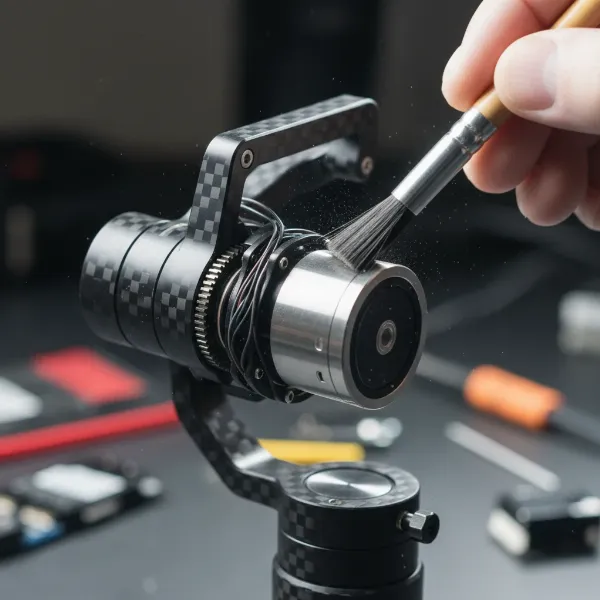 Close-up of a gimbal being inspected for obstructions and debris around its motors and axes, highlighting careful attention to detail for troubleshooting motor overload errors.
Balancing Your Gimbal: The Critical Step
Improper balancing is a significant cause of motor overload, especially for Zhiyun gimbals and professional camera gimbals that support various payloads. Correct balancing ensures the motors work efficiently, consuming minimal power to maintain stability.
How to Properly Balance Your Camera/Smartphone
- Mount Your Device: Securely attach your camera or smartphone to the gimbal.
- Unlock Axes: Release all gimbal locks one by one, allowing each axis to move freely.
- Balance Tilt Axis (Pitch): Loosen the tilt axis knob and adjust the camera forward or backward until it remains level when pointed straight ahead. It should not tilt up or down on its own.
- Balance Roll Axis: Adjust the roll axis arm left or right until the camera stays level without leaning to either side.
- Balance Pan Axis (Yaw): Finally, adjust the pan axis arm until the entire setup is balanced, and the gimbal can hold its position when tilted.
- Test: A perfectly balanced gimbal will allow the mounted device to remain stable in any position even before the gimbal is powered on. If it constantly sags or swings, fine-tune the balance.
“Many gimbal users underestimate the impact of proper balancing. It’s not just about stability; it’s about reducing the workload on your motors and extending your gimbal’s life.” – Alex Chen, Gimbal Technology Specialist
Software Solutions: Calibration and Firmware
If physical checks and balancing don’t resolve the issue, the problem might lie within the gimbal’s software or its internal sensors.
Gimbal Calibration
Both DJI and Zhiyun gimbals offer in-app calibration features.
- DJI Drones: Open the DJI Fly app (or relevant DJI app), go to Settings > Control > Gimbal Calibration, and select auto-calibration. Place your drone on a flat, stable surface away from magnetic interference and follow the on-screen prompts. Some DJI models also benefit from an IMU (Inertial Measurement Unit) calibration, found in the drone’s advanced settings.
- Zhiyun Gimbals: Connect your smartphone to the gimbal via the Zhiyun app (e.g., ZY Play, ZY Cami). Look for a “Calibration” or “Auto Tune” option within the settings. This process usually involves placing the gimbal on a flat surface and letting it perform a series of self-adjustments.
Firmware Updates
Outdated firmware can cause various performance issues, including motor overload.
- Check for Updates: Connect your gimbal (or drone) to its respective mobile app or desktop software (e.g., DJI Assistant 2, Zhiyun Lab). The app will usually notify you if a new firmware version is available.
- Install Carefully: Follow the update instructions precisely. Ensure your device is fully charged and maintains a stable connection throughout the process. Interrupting a firmware update can lead to more serious problems.
Factory Reset (Last Resort)
If all else fails and you suspect a software glitch, a factory reset might clear persistent issues by reverting the gimbal’s settings to their defaults. Be aware that this will erase any customized settings. Check your gimbal’s user manual or app for instructions on how to perform a factory reset.
Hardware Inspection: When the Problem is Deeper
When software solutions don’t yield results, a deeper hardware inspection may be necessary.
Checking for Bent Arms, Loose Cables, or Detached Dampers
With the gimbal powered off, carefully examine the gimbal arms for any visible bends or deformities, which can impede movement. Look closely at the ribbon cables that connect the motors and camera components; ensure they are securely seated and free from kinks, tears, or damage. For DJI Phantom series drones, specifically check the four white rubber dampers that hold the gimbal in place, as these can sometimes become detached, causing instability and overload errors. Gently reattaching them can be a simple fix.
When to Suspect Internal Damage
If you’ve checked all external factors and the error persists, especially after a fall or impact, internal damage is a strong possibility. This could range from worn-out motor bearings to faulty internal wiring that is not visible externally. In such cases, further DIY intervention without specialized tools and knowledge could cause more harm.
Preventing Future Gimbal Motor Overload Errors
Proactive measures are always better than reactive fixes. Implementing a routine of care and attention can significantly reduce the likelihood of encountering “Motor Overload” errors.
Pre-Flight Routines
Make it a habit to perform thorough pre-flight or pre-use checks. Always remove all gimbal protectors and locks. Visually inspect the gimbal for any obstructions or signs of damage. Most importantly, ensure your camera or smartphone is perfectly balanced on the gimbal before powering it on.
Proper Transport and Storage
The delicate nature of gimbals means they are susceptible to damage during transit. Always use a padded carrying case or the original manufacturer’s box with its inserts. Secure the gimbal’s axes with their respective locks before storage or transport to prevent unnecessary movement and strain on the motors.
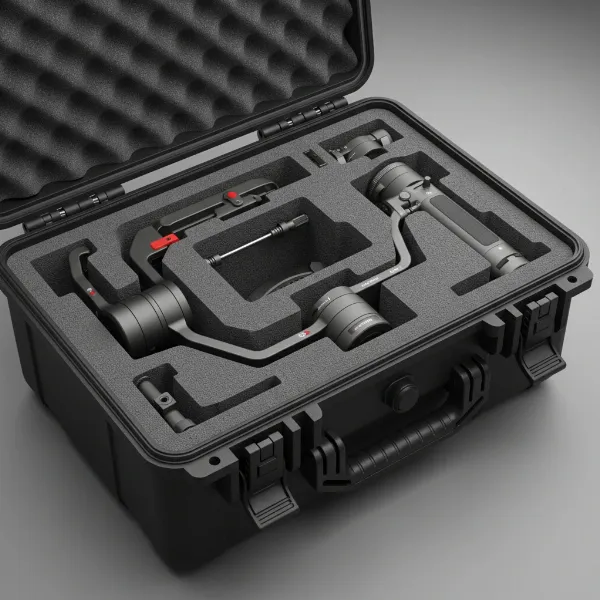 A Zhiyun or DJI gimbal securely stored in a padded case with all locks engaged, illustrating best practices for preventing motor overload through careful transport.
Regular Cleaning and Maintenance
Dust, sand, and other environmental particles are silent killers of gimbal motors. Regularly clean your gimbal with a soft, lint-free cloth and a compressed air blower to keep its moving parts free from debris. Avoid harsh chemicals. Periodically check for any loose screws or components and tighten them gently if necessary.
Environmental Considerations
Be mindful of the environment in which you operate your gimbal. Avoid using it in extremely dusty, sandy, or humid conditions if possible, as these can quickly introduce contaminants into the motor assemblies. When operating drones, always try to take off and land on clean, flat surfaces, or use a landing pad to minimize dust ingestion.
Routine Updates and Calibration
Stay informed about the latest firmware updates for your gimbal and its associated apps. Manufacturers often release updates that improve motor efficiency, stability, and bug fixes. Make gimbal calibration a routine part of your maintenance schedule, perhaps once a month or after any significant environmental changes or bumps.
When to Seek Professional Help
Despite your best efforts, some “Motor Overload” errors indicate a problem beyond simple troubleshooting. Knowing when to escalate the issue can save you from inadvertently causing further damage.
If you have systematically gone through all the troubleshooting steps—checking for obstructions, re-balancing, performing calibrations, updating firmware, and inspecting for visible hardware damage—and the error persists, it’s time to consider professional assistance. This is especially true if you notice consistent erratic motor behavior, grinding noises, or visible physical damage like bent arms that cannot be straightened without specialized tools.
Consult your gimbal’s warranty information. If your device is still under warranty, contact Zhiyun or DJI customer support to explore repair or replacement options. Attempting complex repairs yourself, particularly if it involves opening the gimbal’s housing, may void your warranty. Professional technicians have the diagnostic tools and expertise to identify deeper internal issues, such as faulty internal sensors, motor failures, or intricate circuit board problems, ensuring your gimbal gets the precise care it needs.
Conclusion
A “Motor Overload” error can be an unwelcome interruption to your filming or flying experience, but it’s often a solvable problem with the right approach. By understanding the common causes—from overlooked protectors and improper balancing to software glitches and subtle hardware damage—you can effectively troubleshoot and prevent this issue. Adopting a routine of meticulous pre-use checks, proper balancing, regular cleaning, and timely firmware updates will significantly prolong the life and optimize the performance of your Zhiyun or DJI gimbal. Remember, a well-maintained gimbal is a reliable tool, ensuring that your creative visions are captured with unwavering stability and precision. What steps will you take today to ensure your gimbal is always ready for action?
Frequently Asked Questions
Can I ignore a gimbal motor overload error?
No, you should not ignore a gimbal motor overload error. Ignoring it can lead to permanent damage to the gimbal motors or other internal components, potentially rendering your device unusable. Address the error immediately to prevent further issues.
How often should I calibrate my gimbal?
It is generally recommended to calibrate your gimbal once a month, or whenever you notice any unusual behavior, such as a tilted horizon or inconsistent stabilization. Calibration is also advisable after significant temperature changes, a minor bump, or a firmware update.
What tools do I need for basic gimbal cleaning?
For basic gimbal cleaning, you will typically need a soft, lint-free microfiber cloth, a compressed air blower (like those used for camera lenses), and possibly a very soft brush. Avoid using abrasive materials or liquid cleaners directly on the gimbal’s moving parts.
Does adding heavy accessories always cause a motor overload?
Not necessarily. Adding heavy accessories can cause a motor overload if the gimbal is not designed to support the additional weight, or if the accessories are not properly balanced. Always check your gimbal’s payload capacity and re-balance thoroughly after attaching any accessories.