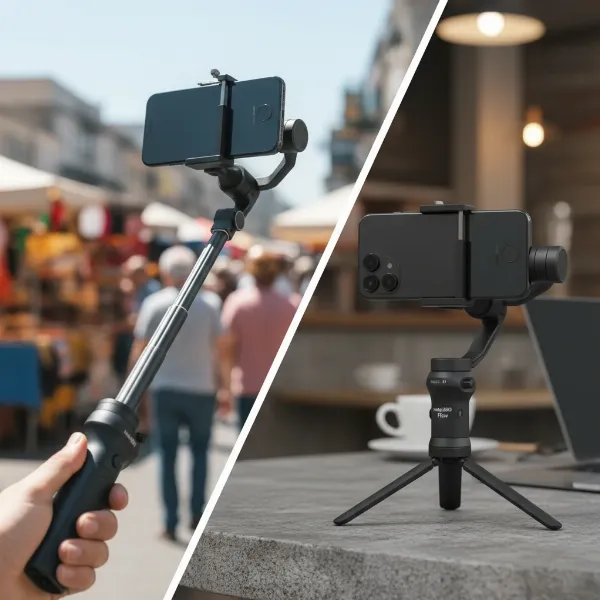
In the fast-evolving world of mobile content creation, capturing smooth, professional-looking footage with just your smartphone is no longer a futuristic dream. Enter AI-powered smartphone gimbals – intelligent stabilizers that transform your phone into a cinematic powerhouse. But what if you could control your camera without ever touching your device, freeing your hands to direct, perform, or simply be part of the moment? This is where gesture control comes in, an intuitive feature leveraging artificial intelligence to put the power of command directly into your hands. This comprehensive guide will walk you through everything you need to know about setting up, utilizing, and mastering gesture control on your AI-powered smartphone gimbal, unlocking a new level of creative freedom and efficiency for your videography.
The Rise of AI-Powered Smartphone Gimbals and Gesture Control
The integration of artificial intelligence into smartphone gimbals has revolutionized mobile filmmaking, making advanced features accessible to everyone from casual vloggers to aspiring cinematographers. At the heart of this revolution is gesture control, an innovation that allows users to interact with their gimbal and smartphone camera through simple hand movements.
What is Gesture Control on a Gimbal?
|
Our Picks for the Best Washing Machine in 2026
As an Amazon Associate I earn from qualifying purchases.
|
||
| Num | Product | Action |
|---|---|---|
| 1 | Waterjoy Portable Washing Machines, 7.7 lbs Load Capacity Portable Washer and Dryer Combo with Built-in Barrel Light & LED Display for Household and Apartment (Blue) |

|
| 2 | Avanti Portable Compact Washing Machine for Clothes/Laundry, 0.84 Cu. Ft. Capacity, Standard Sink/Faucet Attachment for Apartment, Dorm, RV, White |
|
| 3 | Giantex Portable Washing Machine, 17.6lbs Compact Washer Spinner Combo with Pump Drain, Twin Tub 11lbs Wash & 6.6lbs Spin, Lavadoras Portatiles for Apartment RV Dorm College (White & Blue) |
|
| 4 | COSTWAY Portable Washing Machine, Twin Tub 26lbs Capacity Laundry Washer, 18lbs Washer and 8lbs Spinner Combo with Timer Knobs, Built-in Drain Pump, Compact Washer for Home Dorm Apartment, Blue+White |
|
| 5 | COSTWAY Portable Washing Machine, Twin Tub 26 Lbs Capacity, 18 Lbs Washer and 8 Lbs Spinner, Compact Washer with Control Knobs, Timer Function, Drain Pump, Laundry washer for Apartment RV, Blue |
|
| 6 | Portable Washing Machine - Compact 2.0 Cu.ft Portable Washer, Full-Automatic Top Loader for Space Saving, Ideal for Apartments, Homes, and Dorms, 10 Wash Cycles, Low Noise, IPX4 with Drain Pump |
|
| 7 | Giantex Portable Washing Machine, 20lbs Capacity, Twin Tub 2lbs Washer & 8lbs Spinner Combo, Compact for Apartment RV Dorms, Blue & White, GT24267-PE |
|
| 8 | Giantex Portable Washing Machine, 21lbs Capacity, 14.4lbs Washer and 6.6Llbs Spinner, Compact for Apartment RV, White & Gray, GT-GE-10390US-GR-FP |
|
| 9 | Portable Washing Machine,16L Upgraded Large Capacity Portable Washer With 3 Modes Deep Cleaning.Suitable For Travel, Camping,Apartments, Dormitories, Hotels (Green) |
|
| 10 | COSTWAY Portable Washing Machine, Twin Tub 26lbs Capacity Laundry, 18lbs Washer and 8lbs Spinner Combo with Timer Knobs, Built-in Drain Pump, Compact Washer for Home Dorm Apartment (Grey+White) |
|
Gesture control on a smartphone gimbal is a feature that enables hands-free operation of your camera and gimbal movements. Instead of manually pressing buttons on the gimbal or tapping your phone screen, you use predefined hand gestures detected by the gimbal’s built-in AI vision system. This technology is particularly useful for solo creators, allowing them to start/stop recording, initiate subject tracking, or even capture a photo from a distance, all without needing an extra person behind the camera. It offers unparalleled convenience for selfies, vlogs, and dynamic shots where maintaining physical contact with the device is impractical.
Why AI Makes a Difference in Gimbal Control
Artificial intelligence is the brain behind the seamless execution of gesture control. AI algorithms analyze video feeds from your smartphone camera to recognize specific hand shapes and movements, distinguishing them from ambient motion. This intelligent recognition system powers features like ActiveTrack (DJI) and DeepTrack (Insta360), allowing the gimbal to lock onto a subject and follow it precisely, even as they move. AI also enables smart framing, predicting subject movement to keep them centered in the shot. Without AI, gesture control would be limited to basic, unreliable commands, unable to adapt to complex filming scenarios or offer the precision needed for professional-grade content.
Your Essential Guide to Activating Gesture Control
Getting started with gesture control is straightforward, typically involving a few simple steps within your gimbal’s companion app. While specific interfaces may vary between brands, the core process remains consistent.
Initial Setup: Connecting Your Gimbal and Smartphone
Before you can unleash the power of gesture control, your smartphone and gimbal must be properly connected and configured. First, ensure your gimbal is fully charged and your smartphone is securely mounted and balanced. Download the manufacturer’s dedicated app (e.g., DJI Mimo, Hohem Joy, Insta360 App) to your smartphone. Turn on your gimbal and enable Bluetooth on your phone. Open the app, and it should guide you through connecting to your gimbal. This Bluetooth connection is crucial as it allows the app to communicate with the gimbal and interpret your gestures.
Enabling Gesture Control in the App
Once connected, navigate through the app’s camera interface to find the gesture control settings. This is often represented by a hand icon or found within the “Smart Capture” or “Intelligent Features” menu. Tap on this icon or option to enable gesture control. Many apps will present you with options like “Follow & Shoot” or “Shooting only.” “Follow & Shoot” means the gimbal will both track your chosen subject and initiate recording with a gesture. “Shooting only” will simply trigger the shutter or start/stop recording without engaging active tracking. Select the mode that best suits your filming needs.
Common Gestures and Their Functions
Different gimbals may support a variety of gestures, but some are widely adopted across popular brands like DJI, Hohem, and Moza. Understanding these universal commands will significantly enhance your hands-free filming experience.
- Palm Gesture: Often used to initiate or stop tracking and/or recording. Hold an open palm facing the camera for a few seconds until the gimbal recognizes it.
- V-Gesture (Peace Sign): Similar to the palm gesture, the V-gesture is frequently used to start or stop a recording or trigger a photo, especially for selfies.
- “OK” Symbol: On some gimbals, forming an “OK” symbol with your hand can activate subject tracking, allowing the AI to lock onto you and follow your movements.
- “L” Shape with Both Hands: For advanced users on certain gimbals (like some Hohem models), forming an “L” shape with both hands can be used to set a customized composition. You make the gesture, move to your desired frame, and then repeat the gesture to confirm.
- Shaka Gesture (Thumb and Pinky Extended): A lesser-known but powerful gesture on some gimbals, the “shaka” sign can act as a dedicated shutter control, triggering a photo or starting video recording after a short countdown.
Remember to hold your gestures steady and clearly visible to the camera for optimal recognition.
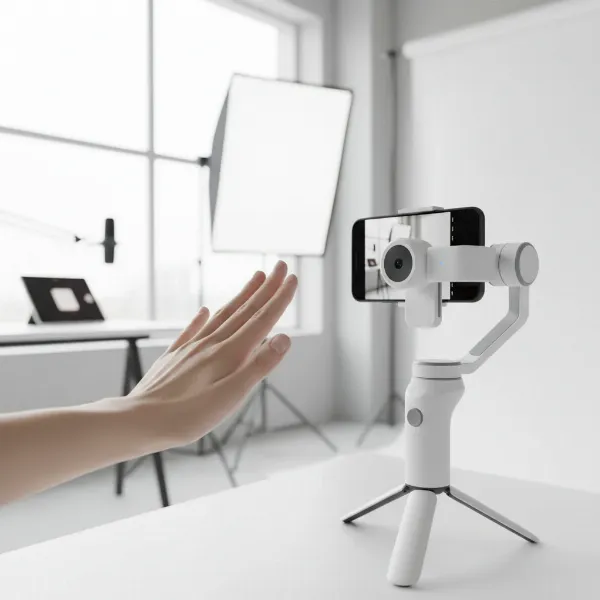 A person demonstrating a palm gesture to an AI-powered smartphone gimbal mounted on a tripod, with a smartphone in the clamp
Advanced Gesture Control Techniques and Best Practices
Once you’ve mastered the basic gestures, you can refine your technique and integrate gesture control more effectively into your creative workflow. Maximizing its potential involves understanding environmental factors and specific gimbal functionalities.
Optimizing Performance: Distance, Lighting, and Framing
For reliable gesture recognition, several factors play a crucial role. First, distance is key; most gimbals recommend a range of 1.3 to 5 feet for optimal detection. Being too close or too far can lead to missed commands. Second, lighting significantly impacts performance; ensure your hands are well-lit and not obscured by shadows. Bright, even lighting helps the AI vision system accurately identify your gestures. Finally, framing is important; make sure your hands are clearly visible within the camera’s frame when making a gesture. Avoid placing your hands too close to your body or in busy backgrounds that might confuse the AI. Consider placing your gimbal on a flat surface or a tripod for stability during hands-free operation.
Customizing Gesture Commands
While many gimbals come with pre-set gestures, some advanced models and their accompanying apps offer options to customize or reassign certain commands. This allows you to tailor the gesture experience to your personal shooting style and frequently used actions. Explore your gimbal’s app settings for “Gesture Customization” or “Intelligent Control Settings.” While not universally available, this feature can streamline your workflow, making interactions even more intuitive. For example, you might be able to assign a specific gesture to switch between landscape and portrait modes, or to trigger a particular shooting effect.
Combining Gesture Control with AI Tracking for Dynamic Shots
The true power of gesture control shines when combined with the gimbal’s AI tracking capabilities. Imagine setting up your shot, using a simple V-gesture to initiate both tracking and recording, and then stepping into the frame knowing the gimbal will follow you effortlessly. This is ideal for dynamic vlogs, dance videos, or any scenario where you need to move freely while staying perfectly in frame. For instance, the DJI Osmo Mobile series’ ActiveTrack, enhanced by AI, can follow a selected subject with remarkable precision. Insta360 Flow’s Deep Track 3.0 offers similar robust AI-powered tracking. Use a gesture to start tracking, and then let the gimbal’s AI do the heavy lifting, keeping you or your subject in focus, even during complex movements like circling the subject for an arc shot.
Popular AI-Powered Gimbals with Gesture Control
The market for AI-powered smartphone gimbals is robust, with several leading brands offering compelling gesture control features. Each has its strengths, catering to different user needs and budgets.
DJI Osmo Mobile Series
DJI is a pioneer in gimbal technology, and its Osmo Mobile series (including models like the Osmo Mobile 8, 7, and 6) is highly popular. These gimbals frequently feature ActiveTrack, DJI’s proprietary AI tracking technology, which integrates seamlessly with gesture control. Users can typically initiate tracking and recording with simple palm or V-gestures through the DJI Mimo app. The more recent DJI Osmo Mobile 7P, with its multifunction module, can even enable AI tracking and gesture control without needing the Mimo app open, offering greater flexibility with third-party camera applications.
Insta360 Flow Series
The Insta360 Flow and Flow 2 Pro are known for their exceptional AI tracking, dubbed Deep Track 3.0. These gimbals combine robust stabilization with advanced AI features, including reliable gesture control for hands-free operation. They are often praised for their ease of use, integrated selfie stick, and tripod, making them an all-in-one solution for content creators. The gesture controls on Insta360 Flow models typically allow users to prompt tracking and initiate shooting from a distance.
Hohem iSteady Series
Hohem offers several gimbals with AI tracking and gesture control, such as the iSteady V3 Ultra, iSteady V2, and iSteady M6. Hohem gimbals often feature unique gestures, like the “L” shape for customized composition or the “shaka” gesture for shutter control. The companion Hohem app facilitates the activation and customization of these features, making them a strong contender for users seeking a variety of gesture options. The iSteady M6, for example, is highlighted for its AI gestures that allow starting tracking with an “OK” symbol and stopping with a palm.
Moza and FeiyuTech Options
Brands like Moza (e.g., Moza Mini MX) and FeiyuTech (e.g., FeiyuTech Mini P) also incorporate gesture control into their AI-powered smartphone gimbals. These typically involve similar app-based activation and common gestures for starting/stopping recording or initiating tracking. They often provide competitive features regarding stability, battery life, and overall user experience, making them viable alternatives for those exploring different options.
Troubleshooting Common Gesture Control Issues
Even with advanced AI, sometimes gesture control might not work as expected. Here’s how to troubleshoot common problems:
When Gestures Aren’t Recognized
- Check Lighting: Poor lighting is a frequent culprit. Ensure your hands are well-lit and there are no strong backlights or shadows that could confuse the AI.
- Distance and Framing: Verify that you are within the recommended operating distance (typically 1.3 to 5 feet) and that your entire hand gesture is clearly visible within the camera’s frame.
- Clear Gestures: Make sure your gestures are distinct and held steady for a few seconds. Avoid quick, imprecise movements.
- Background Clutter: A busy or distracting background can sometimes interfere with gesture recognition. Try to use gesture control in front of a relatively plain background.
Connectivity Problems
- Bluetooth Connection: Confirm that your smartphone is properly connected to the gimbal via Bluetooth. Disconnect and reconnect if necessary.
- App Status: Ensure the gimbal’s companion app is open and running in the foreground. Sometimes, background processes or app crashes can interrupt functionality.
- Firmware Updates: Always keep your gimbal’s firmware and the companion app updated. Manufacturers often release updates that improve gesture recognition and overall performance.
App-Related Glitches
- Restart App and Gimbal: A simple restart of both the app and the gimbal can resolve minor software glitches.
- Reinstall App: If issues persist, try reinstalling the gimbal’s companion app. This can clear corrupted data or resolve installation problems.
- Permissions: Ensure the app has all necessary permissions on your smartphone, especially camera access.
Gesture control on AI-powered smartphone gimbals is a game-changer for content creators, offering unparalleled freedom and convenience. By understanding how to properly set up, use, and troubleshoot this innovative feature, you can elevate your mobile videography and create stunning, dynamic content with ease.
In conclusion, the marriage of AI and gesture control in smartphone gimbals empowers you to create compelling visual narratives like never before. From hands-free selfies to complex tracking shots, these smart devices provide the tools to bring your creative visions to life. Are you ready to take control of your filmmaking with a wave of your hand?
Frequently Asked Questions
What specific hand gestures can I use to control my AI gimbal?
Common gestures include an open palm or a V-sign to start/stop recording or tracking. Some gimbals also recognize an “OK” symbol for tracking activation, an “L” shape for custom compositions, or a “shaka” gesture for shutter control. Always check your gimbal’s manual or app for supported gestures.
Which smartphone gimbals offer reliable gesture control?
Leading brands such as DJI (Osmo Mobile series), Insta360 (Flow series), and Hohem (iSteady series) are known for their robust AI tracking and gesture control features. Models like the DJI Osmo Mobile 7P and Insta360 Flow are particularly well-regarded for their performance in this area.
Can I use gesture control without the gimbal’s app?
While most gimbals require their companion app to be open for gesture control, some advanced models, like the DJI Osmo Mobile 7P with its multifunction module, can perform AI tracking and gesture commands independently of the app, allowing use with native camera apps.
How far away can I be for gesture control to work effectively?
The effective range for gesture recognition typically varies between 1.3 to 5 feet (about 0.4 to 1.5 meters). Being too close or too far, or having poor lighting, can hinder the gimbal’s ability to detect your gestures accurately.
Is gesture control reliable for professional use?
For many professional content creators, especially solo vloggers or those needing hands-free operation, gesture control provides a reliable and efficient method for managing their shots. However, understanding its limitations regarding lighting and distance is key to consistently achieving desired results.