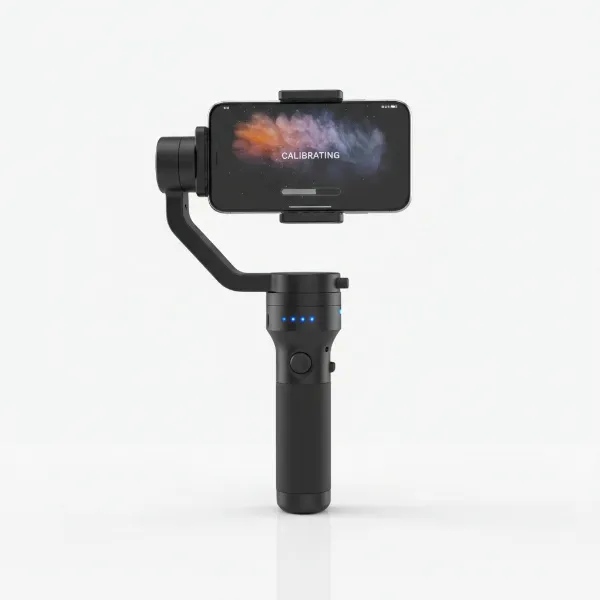
Experiencing frustrating wobbles or micro-jitters in your gimbal footage can turn a cinematic vision into a shaky nightmare. You’re not alone; a vibrating gimbal is a common headache for videographers and drone pilots alike, often signaling a simple fix rather than a catastrophic failure. This comprehensive guide will delve into the root causes of gimbal vibrations and provide you with actionable, step-by-step solutions to restore the silky-smooth stabilization you rely on.
Understanding Gimbal Vibration: The Precision Problem
Gimbals are marvels of engineering, using brushless motors and advanced algorithms to counteract unwanted movements and keep your camera perfectly stable. Whether you’re using a handheld unit for a mirrorless camera or an integrated gimbal on a drone, these devices operate with incredible precision. Even the slightest imbalance or external interference can force the motors to overcompensate, resulting in the tell-tale vibration that compromises your footage. The sensitivity varies significantly; consumer-friendly gimbals for smartphones and action cameras are often more forgiving, while professional gimbals designed for heavier mirrorless and cinema cameras demand millimeter-perfect balance due to their powerful, high-torque motors.
Common Causes Behind Gimbal Vibrations
Identifying the specific reason for your gimbal’s erratic behavior is the first step toward a solution. Here are the most frequent culprits:
Incorrect Camera Balancing
|
Our Picks for the Best Washing Machine in 2026
As an Amazon Associate I earn from qualifying purchases.
|
||
| Num | Product | Action |
|---|---|---|
| 1 | Giantex Portable Washing Machine, 20lbs Capacity, Twin Tub 2lbs Washer & 8lbs Spinner Combo, Compact for Apartment RV Dorms, Blue & White, GT24267-PE |

|
| 2 | Avanti Portable Compact Washing Machine for Clothes/Laundry, 0.84 Cu. Ft. Capacity, Standard Sink/Faucet Attachment for Apartment, Dorm, RV, White |
|
| 3 | Giantex Portable Washing Machine, 17.6lbs Compact Washer Spinner Combo with Pump Drain, Twin Tub 11lbs Wash & 6.6lbs Spin, Lavadoras Portatiles for Apartment RV Dorm College (White & Blue) |
|
| 4 | COSTWAY Portable Washing Machine, Twin Tub 26lbs Capacity Laundry Washer, 18lbs Washer and 8lbs Spinner Combo with Timer Knobs, Built-in Drain Pump, Compact Washer for Home Dorm Apartment, Blue+White |
|
| 5 | Giantex Portable Washing Machine, 21lbs Capacity, 14.4lbs Washer and 6.6Llbs Spinner, Compact for Apartment RV, White & Gray, GT-GE-10390US-GR-FP |
|
| 6 | COSTWAY Portable Washing Machine, Twin Tub 26 Lbs Capacity, 18 Lbs Washer and 8 Lbs Spinner, Compact Washer with Control Knobs, Timer Function, Drain Pump, Laundry washer for Apartment RV, Blue |
|
| 7 | COSTWAY Portable Washing Machine, Twin Tub 26lbs Capacity Laundry, 18lbs Washer and 8lbs Spinner Combo with Timer Knobs, Built-in Drain Pump, Compact Washer for Home Dorm Apartment (Grey+White) |
|
| 8 | Waterjoy Portable Washing Machines, 7.7 lbs Load Capacity Portable Washer and Dryer Combo with Built-in Barrel Light & LED Display for Household and Apartment (Blue) |
|
| 9 | Portable Washing Machine,16L Upgraded Large Capacity Portable Washer With 3 Modes Deep Cleaning.Suitable For Travel, Camping,Apartments, Dormitories, Hotels (Green) |
|
| 10 | Portable Washing Machine - Compact 2.0 Cu.ft Portable Washer, Full-Automatic Top Loader for Space Saving, Ideal for Apartments, Homes, and Dorms, 10 Wash Cycles, Low Noise, IPX4 with Drain Pump |
|
The number one reason for a vibrating gimbal is improper balancing. A gimbal is designed to hold your camera perfectly still even when powered off, meaning it requires no motor power to maintain its position. If the camera isn’t balanced precisely across all three axes (tilt, roll, and pan), the motors will be constantly working overtime to correct the imbalance, leading to strain, overheating, and noticeable jitters or shaking in your footage.
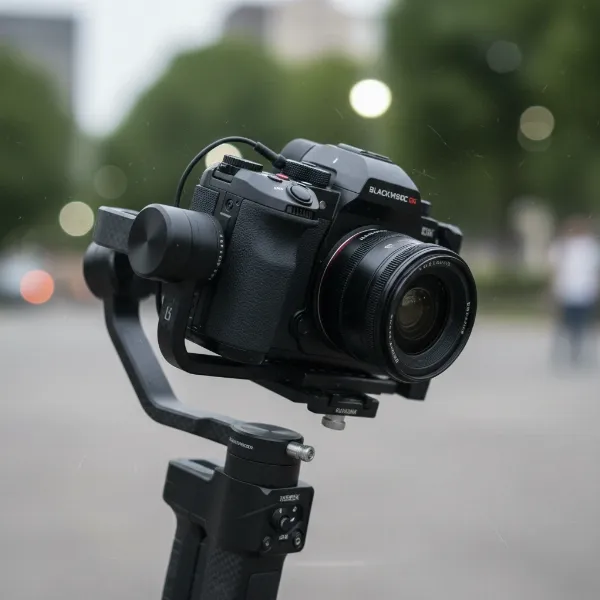 A camera mounted on a gimbal showing noticeable micro-jitters and wobbles due to improper balancing.
Payload Too Heavy or Too Light
Every gimbal has a specified payload capacity, a weight range within which it can operate optimally. If your camera setup (camera body, lens, microphone, external monitor, and any other accessories) exceeds this maximum weight, the motors will struggle to stabilize the load, resulting in vibrations. Less commonly, a setup that is too light for the gimbal’s minimum payload can also cause issues, as the motors may lack the necessary resistance to operate smoothly.
Loose Connections and Unsecured Gear
Even a seemingly minor oversight can lead to significant problems. An unlocked camera plate, loose thumbscrews, an improperly mounted camera, or a stiff cable (HDMI, USB, mic) pressing against an axis can introduce subtle movements or resistance. The gimbal motors will detect these tiny discrepancies and try to correct them, causing a persistent twitch or wobble that appears as vibration in your video.
In-Body Image Stabilization (IBIS) Conflict
Many modern cameras feature in-body image stabilization (IBIS). While excellent for handheld shooting, using IBIS in conjunction with a gimbal can lead to a conflict. The camera’s internal sensor and the gimbal’s external motors both attempt to stabilize the image simultaneously, often working against each other. This “stabilization fight” manifests as micro-jitters, warping, or a subtle, continuous shake in your footage.
Shutter Speed and Frequency Mismatch (Jello Effect)
When shooting indoors or under artificial lighting, a mismatch between your camera’s shutter speed and the local power grid’s alternating current (AC) frequency can cause an effect known as “jello” or flicker. In regions with a 50Hz power grid (like Europe and many parts of Asia), shooting at a shutter speed of 1/60th or 1/120th of a second can result in noticeable light banding or a wavy distortion that resembles vibration. Similarly, in 60Hz regions (like North America), 1/50th or 1/100th could cause issues.
Environmental Factors and Operator Error
External conditions can significantly impact gimbal performance, especially for drone gimbals. Strong winds can overpower the gimbal motors, causing them to shake as they fight against the elements. Similarly, flying at excessive speeds or making abrupt movements can challenge the gimbal’s ability to maintain a smooth shot, particularly if it’s not optimally tuned for such dynamic scenarios.
Gimbal Settings Misconfiguration
Most gimbals come with configurable settings such as motor power, stiffness, and deadband. Incorrectly set parameters can lead to vibrations. For instance, if the motor stiffness is too low for your payload, the gimbal might feel “loose” and shaky. Conversely, if the deadband (the range of movement before the gimbal reacts) is set too high, the gimbal can become overly sensitive and react abruptly, leading to less fluid, more “electronic” looking movements.
Physical Damage or Malfunction
In more severe cases, a vibrating gimbal could be a sign of physical damage or an internal malfunction. A hard drop, impact, or even wear and tear over time can bend an arm, damage a motor, or loosen internal components. For drone gimbals, bent or unbalanced propellers can also transmit vibrations through the drone body to the gimbal, causing instability in the footage.
Step-by-Step Troubleshooting and Quick Fixes
Addressing gimbal vibrations usually involves a systematic approach. Work through these steps to pinpoint and resolve the issue:
Mastering Gimbal Balance
Achieving perfect balance is paramount. Take your time with this crucial step:
- Tilt Axis: Unlock the tilt axis. Point your camera straight up or straight down. Adjust the camera plate until the camera remains stationary in any position without falling forward or backward.
- Roll Axis: Unlock the roll axis. Hold the gimbal upright. Adjust the horizontal roll arm until the camera sits perfectly level, with no tilting to either side.
- Pan Axis: Unlock the pan axis. Tilt the gimbal forward at about a 45-degree angle. Adjust the vertical pan arm until the camera remains perfectly still and doesn’t rotate on its own.
Once balanced, your camera should stay put in any orientation, powered off.
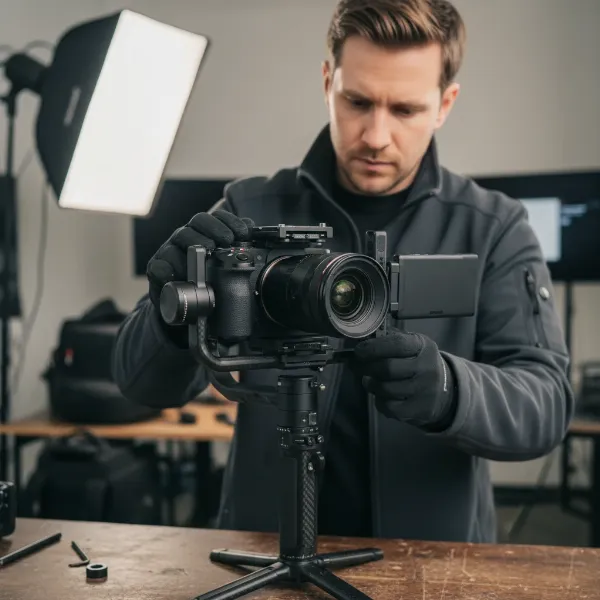 A videographer meticulously balancing a professional camera on a 3-axis gimbal, demonstrating precision adjustment.
Optimizing Your Camera Payload
Before mounting, always weigh your complete camera setup (camera, lens, battery, accessories) and compare it against your gimbal’s specified payload range. If it’s too heavy, remove non-essential accessories or consider a more robust gimbal. If it’s too light and causing issues, you might need to add small counterweights or a camera cage to reach the optimal weight.
Securing Everything Tightly
Go over every connection point. Ensure the camera plate is firmly seated and locked, all thumbscrews are tightened, and any lens feet or support brackets are secure. Pay special attention to cables: use flexible, thin cables if possible, and ensure they are routed in a way that doesn’t snag or exert pressure on the gimbal’s axes during movement.
Disabling In-Body Stabilization
If your camera has IBIS, turn it off entirely when using the gimbal. Let the gimbal handle all stabilization duties for the smoothest possible footage. Check your camera’s menu settings to locate and disable this feature.
Adjusting Camera Settings for Smoothness
To combat the “jello effect” or flickering:
- Determine your local power grid frequency (50Hz or 60Hz).
- Set your camera’s shutter speed to a multiple of that frequency (e.g., 1/50, 1/100 for 50Hz; 1/60, 1/120 for 60Hz). This synchronizes your camera with the lighting and prevents visual distortions.
Calibrating Your Gimbal
Most modern gimbals feature an auto-calibration or auto-tune function. This process allows the gimbal to “learn” your specific camera setup and fine-tune its motor power and responsiveness accordingly. Perform this calibration after every significant change in your camera setup or if you notice new vibrations.
Fine-Tuning Gimbal Motor Settings
Dive into your gimbal’s app or menu to adjust motor parameters.
- Stiffness/Power: If the gimbal feels sluggish or floppy, increase motor stiffness or power incrementally. If it feels too rigid or vibrates intensely, slightly decrease these settings.
- Deadband: Experiment with lowering the deadband settings. While some sources suggest higher deadbands, lowering them can make the gimbal less reactive to tiny hand movements, leading to more organic and fluid transitions. Test different settings to find what works best for your shooting style.
Addressing Environmental Challenges
For drone gimbals, be mindful of strong winds.
- Try flying sideways or backward into the wind to use the drone’s body as a buffer.
- Reduce flight speed in gusty conditions.
- Always inspect drone propellers for damage; even a slightly bent prop can cause significant vibrations.
Inspecting for Damage
After performing all troubleshooting steps, if vibrations persist, carefully inspect your gimbal for any visible signs of damage. Look for bent arms, loose motor connections, or unusual play in any of the axes. Pay attention to any abnormal noises the motors might make.
Preventative Maintenance for Long-Lasting Smoothness
A little proactive care can prevent most gimbal vibration issues:
- Regular Balancing: Make balancing a routine part of your setup, even for minor changes in lenses or accessories.
- Battery Management: Always start a shoot with fully charged gimbal batteries. Low battery levels can lead to reduced motor performance and instability.
- Cleanliness: Keep your gimbal free of dust, dirt, and debris that could interfere with its moving parts or sensors.
- Firmware Updates: Regularly check for and install firmware updates from your gimbal manufacturer. These often include bug fixes, performance improvements, and calibration enhancements.
- Gentle Handling: Avoid sudden, jerky movements when operating the gimbal, as this can strain the motors and lead to premature wear.
When to Seek Professional Help or Consider Replacement
Despite your best efforts, some gimbal problems are beyond DIY fixes. If your gimbal continues to vibrate after meticulous troubleshooting, if you notice visible physical damage (like bent arms or unresponsive motors), or if it makes abnormal grinding noises, it might be time to seek professional repair or consider a replacement. Persistent issues can indicate internal component failure or motor damage that requires specialized tools and expertise to address. Investing in a new gimbal or professional service might be more cost-effective than repeatedly battling a malfunctioning unit.
Conclusion
A vibrating gimbal can be a frustrating obstacle, but with a systematic approach to troubleshooting, you can often pinpoint and resolve the issue quickly. From meticulous balancing and payload optimization to fine-tuning settings and understanding external factors, the path to smooth, professional-looking footage is within reach. Remember that your gimbal is a precision instrument, and understanding its nuances is key to unlocking its full potential.
Ultimately, achieving consistently stable footage requires patience, practice, and a keen eye for detail. By mastering these common fixes and adopting good maintenance habits, you’ll ensure your gimbal remains a reliable tool in your creative arsenal, free from unwanted shakes and jitters. What’s the most challenging gimbal issue you’ve ever faced, and how did you overcome it?
Frequently Asked Questions
Why does my gimbal still shake after I balanced it?
If your gimbal is still shaking after balancing, check for other common issues like an over/underweight camera payload, loose cables or camera components, active in-body image stabilization (IBIS) on your camera, or incorrect gimbal motor settings. Environmental factors like strong wind can also cause instability.
How do I stop the “jello effect” in my gimbal footage?
The “jello effect” often comes from a shutter speed mismatch with the local power grid frequency. Set your camera’s shutter speed to a multiple of 50 (for 50Hz regions) or 60 (for 60Hz regions), such as 1/50th or 1/100th, to synchronize with artificial lighting.
Should I turn off my camera’s IBIS when using a gimbal?
Yes, it’s generally recommended to turn off your camera’s in-body image stabilization (IBIS) when using a gimbal. Activating both can cause conflicts between the camera’s internal stabilization and the gimbal’s external stabilization, leading to micro-jitters or wobbles in your footage.
What is gimbal calibration, and when should I do it?
Gimbal calibration (often called auto-tune) is a process where the gimbal’s motors are automatically fine-tuned to your specific camera setup. You should perform calibration after balancing your camera, whenever you change your camera setup significantly, or if you notice any unusual behavior or vibrations.
Can a low battery cause my gimbal to vibrate?
Yes, a low gimbal battery can certainly cause vibrations. When the battery is running low, the motors may not receive sufficient power to maintain stable operation, leading to strain, weaker stabilization, and noticeable shaking or erratic movements. Always ensure your gimbal is fully charged before use.