The Sony A7IV and A7SIII are powerhouse cameras, renowned for their incredible image quality, advanced autofocus systems, and impressive video capabilities. Yet, even with their in-body stabilization, achieving truly cinematic, shake-free footage often requires an external stabilizer – a gimbal. A high-quality gimbal transforms handheld shots into smooth, professional-grade sequences, unlocking the full potential of your Sony Alpha camera for everything from dynamic action scenes to subtle, flowing narratives. This comprehensive guide will explore the top gimbal choices specifically tailored for Sony A7IV and A7SIII users, detailing their features, performance, and how to select the perfect one to match your unique filmmaking style and budget.
Understanding Gimbal Types for Sony Alpha Cameras
Gimbals come in various forms, each designed to cater to different shooting requirements and camera setups. For Sony A7IV and A7SIII users, the primary categories include standard 3-axis gimbals, compact or mini gimbals, and professional-grade models. Understanding these distinctions is crucial for making an informed choice that aligns with your creative vision.
Standard 3-Axis Gimbals
These are the most common type, offering robust stabilization across three axes: tilt, roll, and pan. They are versatile, balancing performance with relative portability, making them suitable for a wide range of users, from advanced enthusiasts to semi-professionals. Models like the DJI RS 3 fall into this category, providing excellent stabilization for mirrorless cameras with standard lens setups.
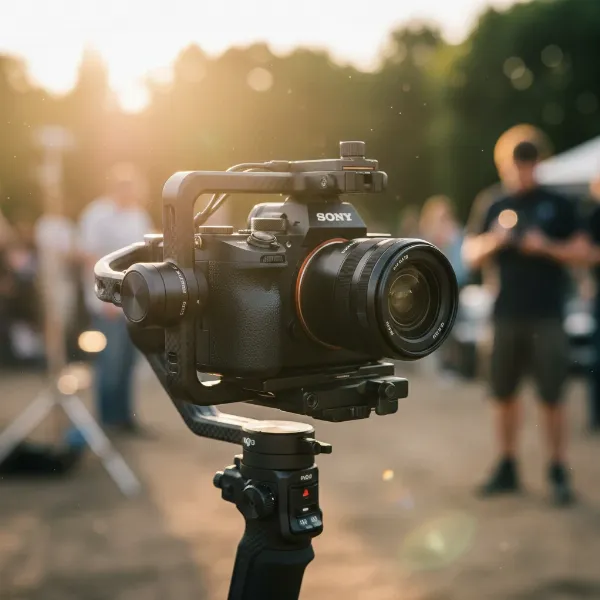 DJI RS3 3-axis gimbal holding a Sony mirrorless camera with a standard lens on a professional shoot
Mini Gimbals
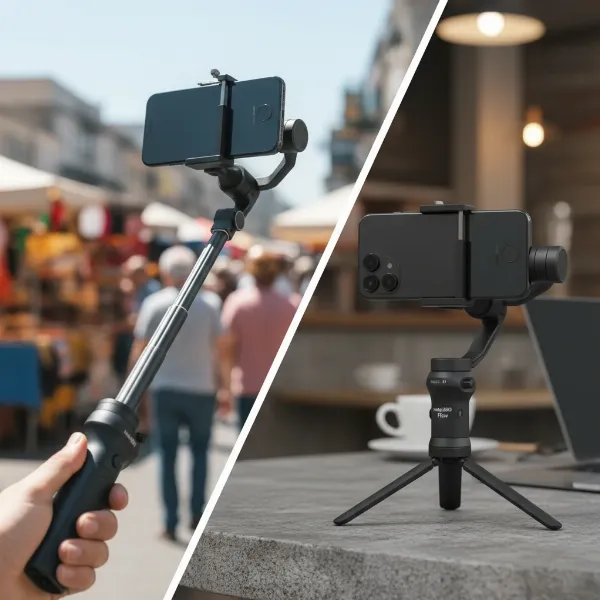
Designed for ultimate portability, mini gimbals prioritize a lightweight and compact form factor. They are ideal for travel vloggers, content creators, and anyone who needs a quick, easy-to-deploy stabilization solution for their Sony A7IV or A7SIII, especially when paired with lighter lenses. The DJI RS 3 Mini is a prime example, offering impressive stability in a highly portable package.
Professional Gimbals
For demanding cinematic productions, professional gimbals offer superior payload capacity, advanced features, and often a more modular design. These are built to handle heavier camera and lens combinations, along with various accessories like external monitors, follow focus systems, and large cine lenses. Gimbals such as the DJI RS 3 Pro and RS 4 Pro are engineered for users who require uncompromising stability and precision in complex shooting environments.
Key Factors When Choosing a Gimbal for Your Sony A7IV/A7SIII
Selecting the ideal gimbal for your Sony A7IV or A7SIII involves careful consideration of several critical factors. These elements directly impact the gimbal’s performance, ease of use, and overall suitability for your specific workflow.
Payload Capacity
The most crucial factor is ensuring the gimbal can comfortably support the combined weight of your Sony A7IV or A7SIII, your heaviest lens, and any accessories like microphones, external monitors, or wireless video transmitters. Overloading a gimbal can lead to poor stabilization, motor strain, reduced battery life, and potentially damage the unit. Always choose a gimbal with a maximum payload capacity that significantly exceeds your intended setup’s total weight, allowing a comfortable margin for optimal performance.
Stabilization Technology
Modern gimbals feature sophisticated algorithms and powerful motors to counteract unwanted movements. Look for gimbals that boast advanced stabilization algorithms, such as DJI’s 3rd-generation or FeiyuTech’s W9 Generation, which can deliver buttery-smooth footage even during dynamic tracking shots. Effective stabilization should minimize micro-vibrations and jitters, providing a stable platform for your camera.
Portability and Ergonomics
Your shooting style heavily influences the importance of portability and ergonomics. For travel vloggers and run-and-gun shooters, a lightweight and compact gimbal that is easy to pack and carry is paramount. Features like an ergonomic grip, underslung modes, or built-in foldable legs can significantly enhance comfort during long shooting sessions and offer versatile handling options for creative angles. Cinematographers using heavier setups might prioritize a robust build and well-distributed weight for stability, even if it means a slightly larger or heavier unit.
Battery Life and Charging
Extended battery life is essential for avoiding interruptions during shoots. Most modern gimbals offer several hours of operation, with some providing up to 12-21 hours on a single charge. Fast charging capabilities, such as 18W or 24W PD charging, are also a valuable feature, allowing you to quickly replenish power during short breaks and get back to shooting without significant downtime. Removable batteries can also be a plus for continuous operation.
Intelligent Features
Today’s gimbals are packed with intelligent features that streamline workflow and expand creative possibilities. Look for automated axis locks that speed up setup and transport, built-in OLED touchscreens for intuitive control, and Bluetooth connectivity for seamless camera integration without cables. Advanced features like AI tracking (e.g., FeiyuTech Scorp 2 KIT, DJI ActiveTrack Pro) can automatically follow subjects, while LiDAR focusing (e.g., DJI RS 3 Pro) offers precise autofocus even with manual lenses or in challenging lighting conditions. Vertical shooting modes are also a boon for content creators targeting social media platforms.
Budget
Gimbals range significantly in price, from budget-friendly options to premium professional tools. Establish your maximum budget and then prioritize the features most important to your workflow. Sometimes, a slightly older model or a ‘mini’ version can offer excellent value and performance for its price point, fulfilling most needs without breaking the bank. Conversely, investing in a higher-end model with advanced capabilities might be worthwhile for professional users whose work demands the utmost precision and versatility.
Top Gimbals for Sony A7IV and A7SIII Users: A Detailed Comparison
When it comes to stabilizing your Sony A7IV or A7SIII, a few brands consistently stand out for their innovation, performance, and reliability. DJI, FeiyuTech, and Zhiyun offer a range of gimbals that cater to diverse needs and shooting styles.
DJI RS Series: Precision and Power
DJI’s RS series is a dominant force in the gimbal market, offering models that span from ultra-portable to professional cinema stabilizers.
- DJI RS 3 Mini: This ultra-compact gimbal is a fantastic choice for travel vloggers and content creators. Weighing just 795g, it’s incredibly portable, yet capable of handling the Sony A7IV with lighter lenses. Its lightweight design makes it comfortable for prolonged handheld shooting, and it offers quick setup and intuitive controls.
- DJI RS 3: A versatile and balanced option, the RS 3 features a lightweight carbon fiber build and a 3kg max payload, comfortably supporting the Sony A7IV with a variety of lenses. Its 3rd-generation stabilization algorithm delivers exceptionally smooth footage, and features like one-touch 3-axis locks, a 1.8-inch OLED touchscreen, and Bluetooth shutter control enhance usability. It’s a dependable workhorse for run-and-gun creators and advanced enthusiasts.
- DJI RS 3 Pro: Designed for demanding shoots, the RS 3 Pro boasts a robust carbon fiber construction and an impressive 4.5kg max payload. This allows it to effortlessly handle the Sony A7IV paired with heavy cinema lenses and extensive accessory rigs. Key professional features include upgraded automated axis locks, an optional LiDAR focusing system for precise autofocus, and ActiveTrack Pro for intelligent subject tracking, making it ideal for professional cinematographers.
- DJI RS 4: The latest evolution in the RS line, the DJI RS 4 offers refined ergonomics and easier balancing due to improved sliding arms and a smarter communication module. With a similar 3kg payload capacity to the RS 3, it maintains DJI’s class-leading stabilization. Teflon-coated arms make micro-adjustments smoother, and an enhanced axis lock system speeds up transport and reconfiguration, providing a practical upgrade for professionals valuing quick setup and better connectivity.
- DJI RS 4 Pro: Building on the RS 4, the Pro version is the pinnacle for professional users. It carries an even higher payload and incorporates the most advanced stabilization and smart features for complex cinema setups, similar to the RS 3 Pro but with the latest technological refinements.
FeiyuTech Scorp Series: Creative Handling and Versatility
FeiyuTech gimbals are known for their distinctive designs and user-friendly features, often providing excellent value.
- FeiyuTech Scorp (e.g., Scorp Mini-3 Combo, Scorp 2 KIT): These gimbals offer a compact design with versatile handling modes, including an ergonomic underslung handle that makes low-angle shots and creative movements much easier. They typically support around a 2.5kg payload, making them suitable for the Sony A7IV with lighter primes or compact zooms. Built-in foldable legs provide instant tabletop stabilization, and features like AI tracking and native vertical shooting modes cater perfectly to content creators and social media enthusiasts. They often include a 2500mAh battery providing up to 12 hours of runtime and 18W PD fast charging.
Zhiyun Weebill Series: Compact Powerhouses with Ergonomic Design
Zhiyun’s Weebill series has gained popularity for its compact footprint and innovative ergonomic solutions.
- Zhiyun Weebill 3S (and Weebill 3 Combo): The Weebill 3S is a highly portable gimbal, weighing just over 1kg, yet capable of handling a 3kg payload – perfect for the Sony A7IV with standard zooms. Its standout feature is the rotating sling grip, which significantly enhances comfort and reduces fatigue during long handheld shots, especially for low and underslung angles. It delivers smooth, cinematic stabilization, has straightforward balancing, and offers approximately 11.5 hours of battery life with 24W PD fast charging. The Weebill 3 Combo version further enhances this with an integrated fill light (up to 1000 lux, 2600K-5400K color temperature) and a built-in noise-canceling microphone, offering an all-in-one solution for content creators.
Comprehensive Comparison Table: Gimbals for Sony A7IV & A7SIII
Choosing the right gimbal often comes down to a balance of payload, portability, features, and budget. This table provides a quick overview of some top contenders.
| Feature / Gimbal | DJI RS 3 Mini | DJI RS 3 | DJI RS 3 Pro | DJI RS 4 | FeiyuTech Scorp Mini-3 | Zhiyun Weebill 3S |
|---|---|---|---|---|---|---|
| Max Payload | Approx. 2 kg (4.4 lbs) | 3 kg (6.6 lbs) | 4.5 kg (10 lbs) | Approx. 3 kg (6.6 lbs) | Approx. 2.5 kg (5.5 lbs) | Approx. 3 kg (6.6 lbs) |
| Weight (Gimbal) | 0.795 kg (1.75 lbs) | 1.3 kg (2.8 lbs) | 1.5 kg (3.3 lbs) | ~1.3 kg (2.8 lbs) | Lightweight/Compact | 1 kg (2.2 lbs) |
| Battery Life | Up to 10 hrs | Up to 12 hrs | Up to 12 hrs | Similar to RS 3 | Up to 12 hrs | Up to 11.5 hrs |
| Fast Charging | Yes | 18W PD | 18W PD | Yes | 18W PD | 24W PD |
| Key Features | Ultra-portable, Vertical Mode | Automated Axis Locks, 1.8″ OLED Touchscreen, Bluetooth | LiDAR Focusing, ActiveTrack Pro, Carbon Fiber Arms | Improved Balancing, Teflon-coated arms, Enhanced Comm Module | Underslung Mode, Built-in Legs, Vertical Shooting | Rotating Sling Grip, Easy Balancing, Some with Built-in Light/Mic |
| Ideal For | Travel, Vlogging, Light Setups | Run-and-gun, Advanced Enthusiasts | Professional Cinema, Heavy Rigs | Professionals seeking quick setup & refinement | Content Creators, Social Media, Travel | Portability, Comfort, Solo Operators |
Buying Guide: Choosing the Right Gimbal for Your Workflow
Navigating the array of choices can be daunting, but by focusing on your specific needs, you can confidently select the perfect gimbal for your Sony A7IV or A7SIII.
Define Your Shooting Style
Consider the primary type of content you create. Are you a solo travel vlogger needing a lightweight, quick-setup device? Or a commercial cinematographer requiring a robust system for heavy lenses and precise movements? Your shooting style dictates priorities like portability, payload, and advanced features. For instance, run-and-gun filmmakers benefit from gimbals with quick-release plates and fast balancing, while cinematic productions might demand LiDAR focusing for critical focus pulls.
Assess Your Gear
Before purchasing, weigh your Sony A7IV or A7SIII with your heaviest anticipated lens and any additional accessories like microphones, external monitors, or matte boxes. This total weight is crucial for determining the minimum payload capacity required. It’s always wise to have a gimbal whose maximum payload significantly exceeds your setup’s weight to prevent motor strain and ensure optimal stabilization performance.
Consider Your Budget
Gimbals vary widely in price. Entry-level models provide excellent stabilization for basic needs, while professional gimbals with advanced features come at a higher cost. Decide how much you are willing to invest and then look for the best feature set within that budget. Remember that sometimes an older generation professional gimbal might offer better value than a brand-new entry-level one.
Ease of Use & Learning Curve
Some gimbals are designed for quick, intuitive setup and operation, while others, particularly professional models, may have a steeper learning curve due to their extensive customization options. Features like automated axis locks, touchscreens, and user-friendly companion apps can significantly improve the user experience. If you’re new to gimbals, prioritizing ease of balancing and straightforward controls can save you frustration.
Future-Proofing
Consider your future needs. Do you plan to acquire heavier lenses or expand your accessory kit? Choosing a gimbal with a slightly higher payload capacity than your current needs can future-proof your investment, allowing for potential camera or lens upgrades without needing to purchase a new stabilizer.
Master Your Gimbal: Tips for Usage and Maintenance
Owning a great gimbal is only half the battle; mastering its use and maintaining it properly will ensure you consistently capture stunning footage and extend its lifespan.
Proper Balancing is Paramount
A perfectly balanced gimbal is the foundation of smooth footage. Always balance your Sony A7IV or A7SIII with its complete, final rig – including battery, lens, lens hood, microphone, and any cables you intend to use. Start with the tilt axis, ensuring the camera stays at any angle, then move to the roll axis, and finally the pan axis. Make tiny, incremental adjustments, and perform a quick motor auto-tune or calibration before each important shoot. Improper balancing drains battery, strains motors, and results in jittery footage.
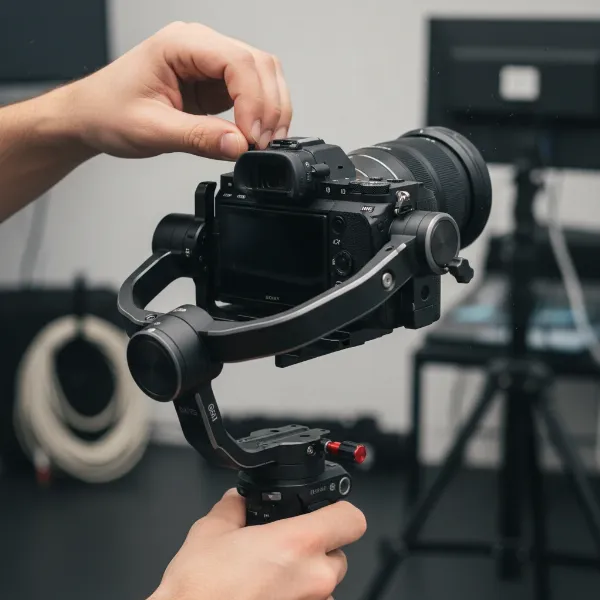 A photographer carefully balancing a Sony mirrorless camera on a 3-axis gimbal for optimal stability
Refine Your Stabilization Techniques
Even with a gimbal, your body acts as the primary shock absorber. Employ a “duck walk” by bending your knees and keeping your core relaxed to absorb vertical bounce. Use a two-handed grip for longer takes to reduce fatigue and provide better control. Understand and intentionally use your gimbal’s different modes (e.g., pan follow, full follow, locked mode) to match your desired shot. Combining your gimbal with the Sony A7IV/A7SIII’s in-body stabilization (if applicable) can further enhance smoothness.
Regular Maintenance for Longevity
Keep your gimbal clean by wiping it down after use, especially to remove dust or debris from moving parts. Store it in its protective case to prevent damage during transport. Regularly check for loose screws or connections. Keeping the gimbal well-maintained ensures consistent performance and extends its operational life.
Stay Updated with Firmware
Manufacturers frequently release firmware updates for gimbals to improve stabilization algorithms, add new features, and enhance camera compatibility. Always check for and install the latest firmware for both your gimbal and your Sony A7IV/A7SIII to ensure optimal performance and seamless communication between the devices.
Conclusion
Choosing the best gimbal for your Sony A7IV or A7SIII involves carefully matching the stabilizer’s capabilities to your individual shooting style, gear, and budget. Whether you prioritize the ultra-portability of a DJI RS 3 Mini for travel vlogging, the balanced performance of a DJI RS 3 for general content creation, or the robust power of a DJI RS 3 Pro for cinematic productions with heavy lenses, there’s a perfect solution waiting for you. By considering factors like payload capacity, intelligent features, and ease of use, you can unlock unparalleled smoothness and elevate your filmmaking to truly professional levels.
What kind of cinematic stories are you excited to tell with your newly stabilized Sony Alpha setup?
Frequently Asked Questions
What is the best all-around gimbal for the Sony A7IV?
The “best” gimbal depends on your specific needs. For a versatile all-rounder, the DJI RS 3 is often highly recommended due to its excellent balance of payload capacity, advanced features, and user-friendly design, suitable for a wide range of content creation.
Do I need a pro-level gimbal for lightweight lenses with my Sony A7IV?
Not necessarily. If you primarily use lightweight prime or compact zoom lenses, a compact gimbal like the DJI RS 3 Mini or FeiyuTech Scorp Mini-3 will likely offer ample stabilization and better portability without the added cost and bulk of a professional model.
How important is payload capacity for a gimbal?
Payload capacity is critically important. It determines the maximum weight a gimbal can effectively stabilize. Always ensure your gimbal’s payload rating significantly exceeds the combined weight of your camera, lens, and all accessories to guarantee smooth performance and prevent motor strain.
Can I use older gimbal models with the Sony A7IV or A7SIII?
While some older gimbals might physically mount the A7IV/A7SIII, full compatibility, especially for camera control (shutter, focus, ISO), often requires newer models or specific firmware updates. Always check the manufacturer’s compatibility list before purchasing an older model.
How often should I balance my gimbal?
You should rebalance your gimbal every time you change lenses, add accessories, or significantly alter your camera setup. Even minor changes in weight distribution can affect performance, making a quick rebalance essential for optimal stability.
What is the main difference between the DJI RS 3 and RS 4?
The DJI RS 4 is an evolution of the RS 3, offering refinements such as easier and faster balancing mechanisms, improved axis lock systems, and an enhanced communication module. While the core stabilization remains excellent, the RS 4 focuses on improving workflow efficiency and user experience.