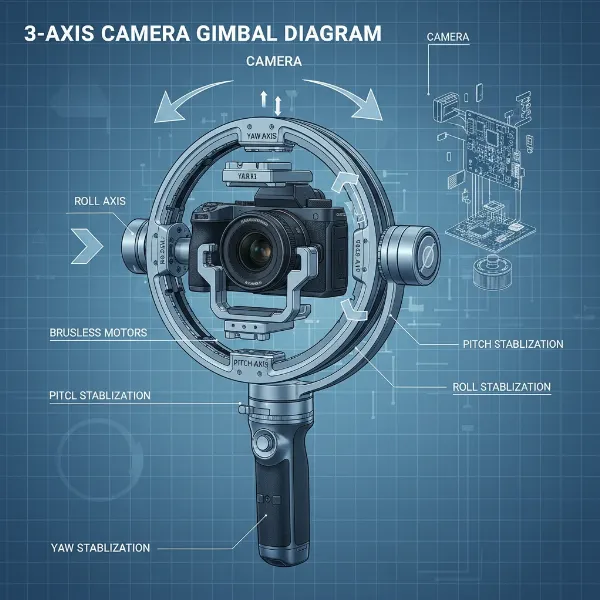
Gimbals are the unsung heroes of smooth, cinematic footage, providing essential stabilization for cameras on drones, handheld devices, and more. Yet, even the most advanced gimbals can encounter issues, often communicating these problems through a perplexing series of beeps and cryptic error codes. When your gimbal starts acting up, understanding these signals is the first step towards getting back to capturing perfect shots. This guide will walk you through interpreting common gimbal error codes and beeps, offering practical troubleshooting steps to diagnose and resolve these frustrating interruptions.
Understanding Gimbal Beep Patterns
|
Our Picks for the Best Washing Machine in 2026
As an Amazon Associate I earn from qualifying purchases.
|
||
| Num | Product | Action |
|---|---|---|
| 1 | Giantex Portable Washing Machine, 20lbs Capacity, Twin Tub 2lbs Washer & 8lbs Spinner Combo, Compact for Apartment RV Dorms, Blue & White, GT24267-PE |

|
| 2 | COSTWAY Portable Washing Machine, Twin Tub 26lbs Capacity Laundry, 18lbs Washer and 8lbs Spinner Combo with Timer Knobs, Built-in Drain Pump, Compact Washer for Home Dorm Apartment (Grey+White) |
|
| 3 | Giantex Portable Washing Machine, 21lbs Capacity, 14.4lbs Washer and 6.6Llbs Spinner, Compact for Apartment RV, White & Gray, GT-GE-10390US-GR-FP |
|
| 4 | Avanti Portable Compact Washing Machine for Clothes/Laundry, 0.84 Cu. Ft. Capacity, Standard Sink/Faucet Attachment for Apartment, Dorm, RV, White |
|
| 5 | COSTWAY Portable Washing Machine, Twin Tub 26lbs Capacity Laundry Washer, 18lbs Washer and 8lbs Spinner Combo with Timer Knobs, Built-in Drain Pump, Compact Washer for Home Dorm Apartment, Blue+White |
|
| 6 | Portable Washing Machine - Compact 2.0 Cu.ft Portable Washer, Full-Automatic Top Loader for Space Saving, Ideal for Apartments, Homes, and Dorms, 10 Wash Cycles, Low Noise, IPX4 with Drain Pump |
|
| 7 | Portable Washing Machine,16L Upgraded Large Capacity Portable Washer With 3 Modes Deep Cleaning.Suitable For Travel, Camping,Apartments, Dormitories, Hotels (Green) |
|
| 8 | COSTWAY Portable Washing Machine, Twin Tub 26 Lbs Capacity, 18 Lbs Washer and 8 Lbs Spinner, Compact Washer with Control Knobs, Timer Function, Drain Pump, Laundry washer for Apartment RV, Blue |
|
| 9 | Waterjoy Portable Washing Machines, 7.7 lbs Load Capacity Portable Washer and Dryer Combo with Built-in Barrel Light & LED Display for Household and Apartment (Blue) |
|
| 10 | Giantex Portable Washing Machine, 17.6lbs Compact Washer Spinner Combo with Pump Drain, Twin Tub 11lbs Wash & 6.6lbs Spin, Lavadoras Portatiles for Apartment RV Dorm College (White & Blue) |
|
Gimbal beeps are not random noises; they are intentional audio cues designed by manufacturers to alert users to specific conditions or problems. Learning to distinguish between these patterns can quickly narrow down the potential cause of an issue.
Low Battery Warnings
One of the most common reasons for a gimbal to beep is a low battery. If your gimbal is beeping continuously, especially more than 15 times, it often indicates that the battery voltage is too low. This might be a sign that the battery needs charging, or, in some cases, that the battery itself is faulty and no longer holding a charge effectively. A continuous double beep can also frequently signal a low battery state.
Calibration Sequences
Not all beeps signify an error. Some patterns, such as beeping that stops after approximately 13-14 distinct sounds, can indicate that your gimbal is undergoing a calibration process. During this time, the gimbal is self-adjusting to ensure optimal balance and functionality. It’s crucial not to interrupt this process.
Urgent Alerts
More rapid and erratic beeping patterns often serve as urgent warnings. These could indicate critical issues that require immediate attention, such as an imminent collision detected by a drone’s sensors or other serious operational faults that could compromise flight safety or equipment integrity.
Other Intermittent Beeps
Intermittent beeps might point to less critical issues. These could include a weak signal between your drone and controller, or even the activation of certain features like a “Return-to-Home” function on a drone. A series of beeps, when not continuous, can also be a general indicator of a malfunction or error code that requires consulting your device’s specific manual for a detailed interpretation.
Gimbal Indicator Lights
Beyond auditory cues, many gimbals feature indicator lights that provide visual feedback on their status. If the light is not lit, it typically means the gimbal is not receiving power. A fast-flashing light often indicates that the gimbal is currently performing a self-check, while a slow-flashing light suggests an abnormal line or sensor issue. A constantly lit indicator usually means the gimbal is functioning normally, or, paradoxically, that it is stuck and unable to operate.
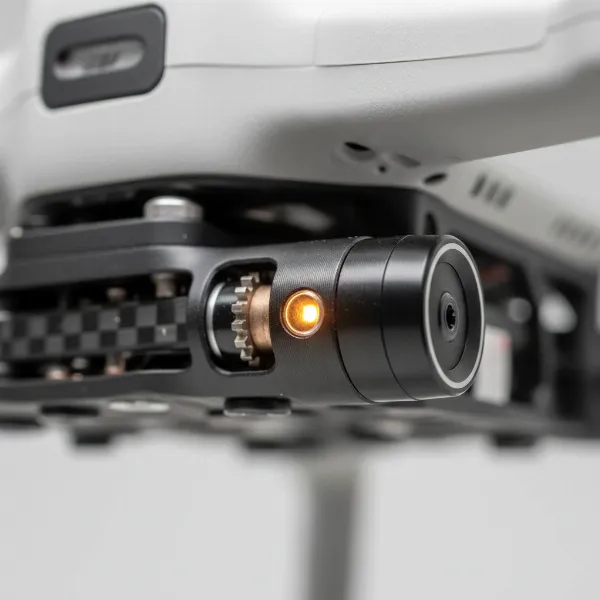 A close-up of a drone gimbal showing its status indicator light during operation.
Common Gimbal Error Codes and Their Meanings
Many modern gimbals, especially those integrated into drones, will display specific error codes through an accompanying app or controller screen. These codes offer more precise diagnostic information than simple beeps. Here are some of the most frequently encountered gimbal error codes, often seen in DJI drones, and what they typically mean.
Gimbal Stuck (e.g., DJI 40002)
One of the most prevalent errors, “Gimbal Stuck” (often represented as DJI Error Code 40002), usually means the gimbal’s movement is restricted. This commonly happens if the gimbal cover or protector is left on when the device is powered up. The gimbal attempts to self-calibrate but cannot move freely. Persistent obstruction can lead to motor burnout, rendering the camera useless. Other causes include physical damage, foreign objects like sand or dirt, or a damaged ribbon cable.
Gimbal Calibration Error (e.g., DJI 40011)
Error codes like DJI 40011 indicate that the gimbal is experiencing issues with its calibration. This means the internal sensors are having trouble establishing a proper baseline for stabilization. This often requires running an automatic gimbal calibration through the device’s companion app.
Gimbal Unable to Connect (e.g., DJI 40012)
If your device displays an error suggesting the “Gimbal Unable to Connect” (such as DJI 40012), it typically points to a hardware failure. This could involve a damaged connection between the gimbal and the main unit, or a fault within the gimbal’s internal components, often necessitating a professional repair or replacement.
Gimbal IMU Data Error (e.g., DJI 40021)
An “IMU Data Error” (like DJI 40021) signals a problem with the Inertial Measurement Unit (IMU) within the gimbal. The IMU is critical for sensing the gimbal’s orientation and movement. An error here means the gimbal cannot accurately determine its position, leading to stabilization issues. This usually requires contacting customer support for diagnosis and potential repair.
Abnormal Gimbal Vibration
While not always a specific code, “abnormal gimbal vibration” is a common warning message. This can manifest as an unstable, “jello-like” effect in your video footage. It typically results from vibrations from the drone affecting the gimbal, often due to damaged or loose anti-vibration components (like rubber dampeners or vibration-absorbing plates) or unbalanced propellers.
Sensor Errors (e.g., DJI 180016, 180030, 180031)
Generic sensor errors (such as DJI codes 180016, 180030, and 180031) can sometimes relate to gimbal functionality, especially if the sensors are integral to its operation or the drone’s overall stabilization. These may require restarting the drone, and if the issue persists, could indicate broken sensors requiring professional assistance.
| Error Type | Common Indicators | Primary Cause | Initial Troubleshooting |
|---|---|---|---|
| Gimbal Stuck | Error code (e.g., 40002), restricted movement | Obstruction (cover, debris), physical damage, cable | Remove cover, inspect for debris/damage |
| Calibration Error | Error code (e.g., 40011), tilted horizon, unstable footage | Misalignment, sensor anomaly | Run auto-calibration via app |
| Connection Error | Error code (e.g., 40012), gimbal unresponsive | Hardware failure, faulty cable connection | Restart device, inspect cables |
| IMU Data Error | Error code (e.g., 40021), erratic movement | IMU malfunction | Restart device, seek professional help |
| Abnormal Vibration | “Jello” effect in video, warning message | Damaged anti-vibration parts, unbalanced propellers | Inspect dampeners/propellers, replace damaged parts |
| Low Battery | Continuous beeping (>15 beeps), double beep | Insufficient power | Charge battery, check battery health |
| Calibration In Progress | Beeping stops after ~13-14 beeps | Normal system check | Allow process to complete, do not interrupt |
Step-by-Step Troubleshooting for Gimbal Issues
When faced with gimbal errors or persistent beeps, a systematic approach to troubleshooting can often resolve the problem without needing professional intervention.
Initial Checks
Start by performing the simplest, most common fixes.
- Power Cycle: A complete restart of both your drone (or device) and its controller can often clear temporary software glitches. Power everything down, wait a few moments, and then restart.
- Physical Inspection: Carefully inspect the gimbal for any visible obstructions. Ensure the gimbal cover has been removed before powering on. Look for dirt, sand, dust, or any foreign objects that might be impeding its movement. Gently clean any debris with a blower or soft brush. Also, check for any obvious physical damage, such as bent arms, loose connectors, or frayed ribbon cables, which are common points of failure, particularly after a hard landing.
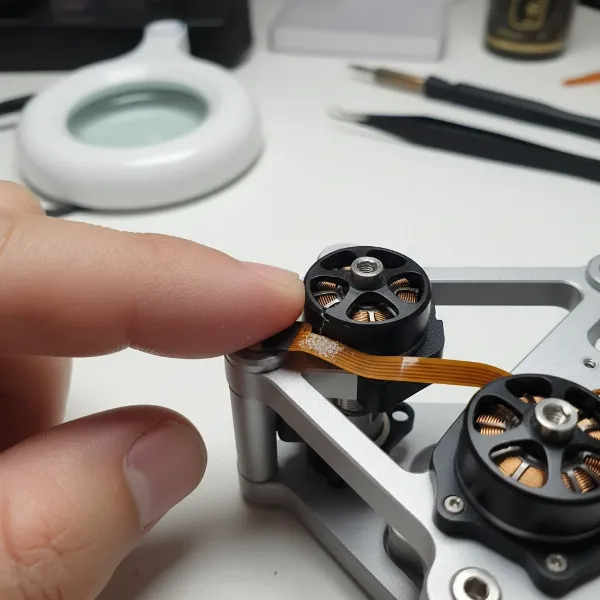 A person's hand carefully inspecting a drone gimbal for physical damage or obstructions.
In-App Solutions
Many gimbal systems offer diagnostic and calibration tools within their companion applications.
- Gimbal Calibration: Access your device’s app (e.g., DJI Fly App). Navigate to the camera or gimbal settings and select the “Auto Calibrate Gimbal” option. Place the device on a flat, level surface and allow the calibration to complete without interruption. This process helps the gimbal re-establish its balance and motion parameters.
- IMU Calibration: If your gimbal is still experiencing issues, particularly with stability or horizon leveling, you might need to calibrate the IMU. This is also typically found within the app’s sensor settings. Follow the on-screen instructions carefully, as IMU calibration often requires specific device orientations.
Firmware Updates
Outdated firmware can be a root cause for various performance issues, including gimbal malfunctions. Ensure that both your drone/device and its controller have the latest firmware installed. Manufacturers frequently release updates that include bug fixes and performance enhancements. Check the companion app or the manufacturer’s website for available updates and follow the installation instructions precisely.
Battery Health Check
As continuous beeping often signals a low battery, ensure your batteries are fully charged and in good health. If you have multiple batteries, try swapping to a different one to rule out a faulty battery as the cause. A deteriorating battery might not supply stable voltage, affecting gimbal performance.
Environmental Considerations
Environmental factors can also play a role. Flying in heavy fog, rain, or excessively humid conditions can cause moisture to enter the gimbal, leading to temporary malfunctions. In such cases, the gimbal may recover full functionality once it has had a chance to dry out completely. Similarly, strong winds can push the gimbal to its operational limits, sometimes triggering overload warnings.
When to Seek Professional Help
If you’ve exhausted all troubleshooting steps and your gimbal continues to display errors or behave erratically, it’s time to consider professional repair. Hardware failures, especially those involving internal sensors, motors, or damaged ribbon cables that are not easily accessible, often require specialized tools and expertise. Ignoring persistent hardware issues can lead to further damage. Contact the manufacturer’s support or a certified repair center for assistance.
Preventive Measures for Gimbal Health
Proactive maintenance can significantly extend the life of your gimbal and prevent many common errors.
- Always Remove the Gimbal Cover: Make it a habit to remove the gimbal cover or protector before powering on your device. This simple step prevents the most common “gimbal stuck” errors and protects the motors from unnecessary strain.
- Gentle Handling: Gimbals are delicate instruments. Avoid sudden movements, impacts, or setting your device down roughly. Always transport your equipment in a protective case.
- Regular Inspections: Periodically inspect your gimbal for any signs of wear, tear, or accumulated debris. Keep it clean and free from dust or sand, especially after use in challenging environments.
- Keep Firmware Updated: Regularly check for and install firmware updates for both your device and its controller. These updates often include critical bug fixes and improvements that enhance gimbal stability and reliability.
Conclusion
Interpreting gimbal error codes and beeps can seem daunting, but with a structured approach, most issues are resolvable. By understanding the common signals, performing diligent troubleshooting, and adhering to preventive maintenance, you can ensure your gimbal remains a reliable tool for capturing stunning, stable footage. Proactive care is always the best defense against unexpected glitches and costly repairs. Don’t let a series of beeps ground your creative ambitions; learn to speak your gimbal’s language.
What’s the most unusual gimbal error you’ve ever encountered, and how did you solve it?
Frequently Asked Questions
What causes a gimbal to beep continuously?
A continuous beeping sound from your gimbal, especially prolonged or repetitive patterns, most often indicates a low battery warning. It could also signal an urgent operational alert or a critical system malfunction, depending on the specific device and beep pattern.
How do I know if my gimbal is stuck?
You’ll typically know your gimbal is stuck if it displays an error code like “Gimbal Stuck” (e.g., DJI 40002) on your app, or if it cannot move freely during startup or operation. Visually inspect for obstructions like the gimbal cover, debris, or physical damage preventing its movement.
Can I fix a gimbal calibration error myself?
Yes, many gimbal calibration errors can be fixed by performing an automatic calibration through your device’s companion app. Ensure the device is on a level surface and follow the app’s instructions. If it fails, an IMU calibration might also be necessary.
What if my gimbal has physical damage?
If your gimbal has physical damage such as bent arms, frayed cables, or cracked components, immediate troubleshooting steps like restarting or calibrating may not resolve the issue. Minor damages might be fixed with careful repair, but significant damage usually requires professional service or replacement to restore full functionality and prevent further problems.