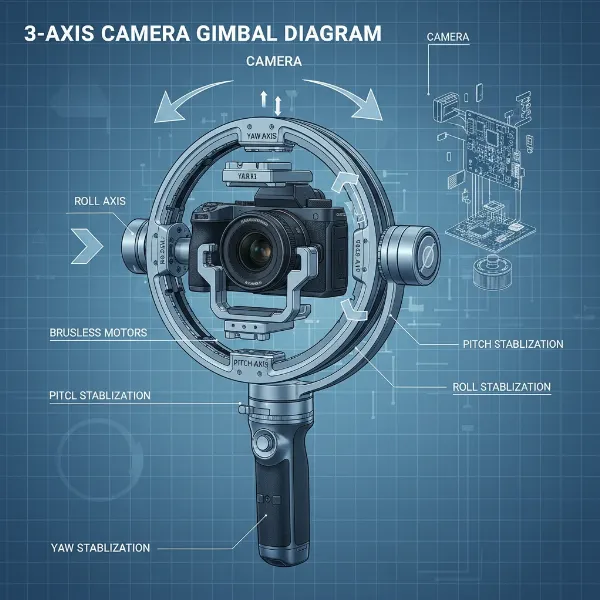
Are you constantly battling arm fatigue or struggling to mount all your essential accessories to your DJI Ronin gimbal? Filmmakers often face the challenge of maintaining steady shots over long periods and integrating complex camera setups while keeping their rig manageable. A ring grip system transforms your single-handed gimbal into a versatile, two-handed powerhouse, offering superior stability, enhanced control, and ample mounting points for a fully kitted-out cinema rig. This comprehensive guide will walk you through everything you need to know to set up a ring grip for your DJI Ronin, ensuring smoother operation and more comfortable shooting experiences.
What is a DJI Ronin Ring Grip and Why Do You Need One?
A DJI Ronin ring grip is an accessory frame that encloses your DJI Ronin gimbal, providing multiple points of contact for holding and stabilizing your setup. Instead of supporting the entire weight with one hand, a ring grip distributes the load across both arms and often closer to your core, significantly reducing operator fatigue during extended shoots. This ergonomic design is a game-changer for filmmakers who spend hours on set. [cite: 3search result 3, 5search result 5]
Beyond comfort, a ring grip offers unparalleled versatility. The circular or rectangular frame is typically covered with numerous 1/4″-20 and 3/8″-16 mounting points, as well as NATO rails, allowing you to attach a wide array of accessories directly to your rig. Imagine having dedicated spots for your external monitor, wireless follow focus motor, microphone, wireless video transmitter, and even an external V-mount or Gold-mount battery to power everything. This centralized accessory management not only streamlines your workflow but also allows for more creative camera movements, including low-angle shots and underslung operation, by providing additional gripping options from nearly any angle. [cite: 1, 2search result 1, 3search result 3]
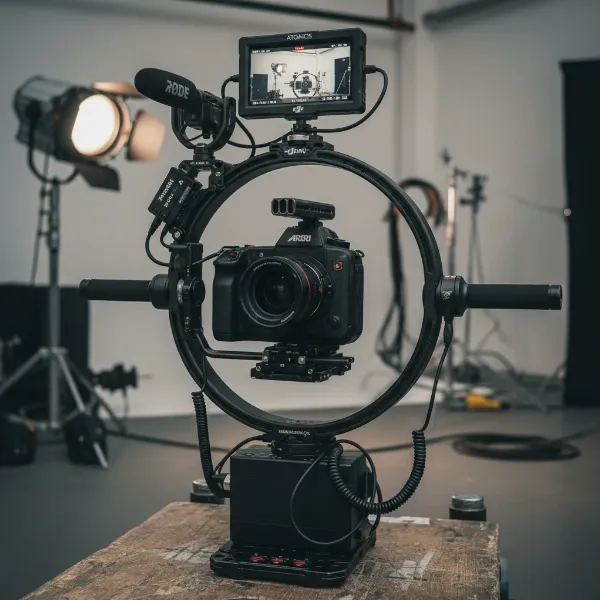 Fully assembled DJI Ronin ring grip with camera, monitor, and wireless accessories attached for a cinema rig setup
Types of DJI Ronin Ring Grips and Compatibility
The market offers various ring grip solutions, each with its unique features and compatibility. Understanding these differences is key to choosing the right setup for your filmmaking needs.
- Basic Ring Grips: These systems typically provide a robust frame and handles for two-handed operation and accessory mounting points. They focus on improving stability and ergonomics without adding advanced electronic controls. Many basic models are designed to integrate with the DJI Ronin’s existing battery handle, often allowing it to be mounted on top as a top handle for low-angle shots. [cite: 2search result 5]
- Advanced Ring Grips: Taking functionality a step further, advanced ring grips often include integrated electronic control handles. These handles can offer joystick control for gimbal movement, focus wheels for lens control (compatible with systems like Tilta Nucleus-Nano or DJI Wireless Focus Motor), and sometimes even camera start/stop recording functions. The Tilta Advanced Ring Grip, for example, is known for its sophisticated control options. [cite: 1search result 1, 2search result 2]
Popular Brands:
- Tilta: A leading manufacturer, Tilta offers several ring grip options, including the Basic Ring Grip Plus and the Advanced Ring Grip, compatible with DJI RS 2, RS 3, RS 3 Pro, RS 4, and RS 4 Pro gimbals. They often feature robust construction from magnesium-aluminum alloy and internal cabling for a cleaner build. [cite: 2, 5search result 5]
- SmallRig: Known for its modular camera accessories, SmallRig also produces ring grip solutions that are often lauded for their build quality and extensive mounting options.
- Digitalfoto: This brand offers affordable yet effective ring grips, often highlighting ease of setup and V-mount battery integration. [cite: 1search result 1]
Compatibility: Most ring grips are designed specifically for the DJI RS series gimbals, including the DJI RS 2, RS 3, RS 3 Pro, RS 4, and RS 4 Pro. Always verify the compatibility of a ring grip with your specific Ronin model before purchasing, as design differences can impact fit and function.
Essential Components for Your Ring Grip Setup
Building a functional and efficient ring grip setup requires several key components. Understanding each part ensures you can assemble your rig correctly and customize it to your shooting style.
- The Ring Frame: This is the core structure, typically consisting of several interconnected sections that form the complete ring. These sections are usually screwed together to create a rigid frame. Some models might come in two primary parts (top and bottom) that connect easily.
- Side Handles: Ergonomic handles attach to the sides of the ring frame. These provide the primary grip points for two-handed operation. Advanced versions might include integrated controls for your gimbal and camera. [cite: 2search result 2]
- Gimbal Mounting Plate: A dedicated quick-release mounting plate is usually included with the ring grip. This plate allows you to securely attach your DJI Ronin gimbal to the center of the ring, ensuring it’s firmly locked in place.
- Power Solutions: Many ring grips facilitate external power. This can include:
- DJI Battery Integration: The original DJI Ronin battery grip can often be secured within the ring grip’s structure, sometimes acting as a top handle and providing power. [cite: 1search result 1, 3search result 3]
- V-mount or Gold-mount Battery Plates: These are common additions, allowing you to mount larger, long-lasting external batteries (V-mount or Gold-mount) directly to the ring. These often connect via D-tap cables to power the gimbal and other accessories. [cite: 1search result 1, 2search result 2, 5search result 1]
- Optional Accessories: The true power of a ring grip lies in its expandability. Consider adding:
- External Monitor Mounts: To attach a field monitor for better viewing.
- Wireless Follow Focus Motors: For precise manual focus control from the handles.
- Wireless Video Transmitters: To send video signals to a director’s monitor.
- Microphone Mounts: For onboard audio capture.
- Thumb Controllers: For fine-tuning gimbal movements without touching the handles.
Step-by-Step Guide: How to Set Up Your DJI Ronin Ring Grip
Setting up your ring grip might seem daunting at first, but by following these steps, you’ll have your Ronin rigged and ready for action.
- Assemble the Ring Frame: Begin by connecting the various parts of the ring grip to form the complete frame. Typically, this involves screwing together the lower and upper sections, ensuring all connections are secure and tightened. Some designs involve screwing on bottom arms first, then attaching a top arm. [cite: 2, 3search result 3]
- Attach the Side Handles: Mount the ergonomic side handles to the designated points on the ring frame. If your ring grip includes electronic control handles, ensure they are attached to the correct sides (e.g., the control handle with a focus wheel might go on the right, and a joystick control handle on the left). Ensure these are firmly secured. [cite: 2search result 2, 3search result 3]
- Mount the DJI Ronin Gimbal: Disassemble your DJI Ronin gimbal from its original tripod or handle. Securely attach the gimbal to the quick-release mount located at the base of the ring grip. It’s crucial that the gimbal clicks into place and is firmly locked to prevent any accidental detachment during operation. For DJI RS 3 Pro, initial activation via the Ronin app may be required after powering on. [cite: 2search result 2]
- Integrate Your Power Solution:
- DJI Battery Grip: If your ring grip supports it, insert your DJI Ronin’s original battery grip into its designated power supply handle attachment, often at the top of the ring, and tighten it down. This can also serve as a convenient top handle. [cite: 1search result 1, 3search result 3]
- External Batteries: If using V-mount or Gold-mount batteries, attach the battery plate to one of the mounting points on the ring frame, often a bottom arm. Connect the D-tap cable from the external battery to the gimbal’s power input, usually via a power module or a dedicated D-tap port on the ring grip itself. [cite: 1search result 1, 2search result 2, 5search result 1]
- Attach Your Essential Accessories: Now is the time to populate your ring grip with your monitors, wireless transmitters, follow focus motors, and microphones. Utilize the numerous 1/4″-20, 3/8″-16, and NATO rail mounting points around the ring. Route any necessary cables neatly using cable ties to avoid snags or interference with gimbal movement.
- Balance the System: This is arguably the most critical step. Once all components, including the camera, lens, and accessories, are attached and powered, your gimbal’s balance will be significantly altered. Power off the gimbal and carefully re-balance each axis (tilt, roll, pan) according to your DJI Ronin’s instructions. A perfectly balanced gimbal is essential for smooth operation, preventing motor strain, and extending battery life. Remember that balancing should be done after all accessories are mounted, as adding cables and plates will shift the center of gravity. [cite: 5search result 1]
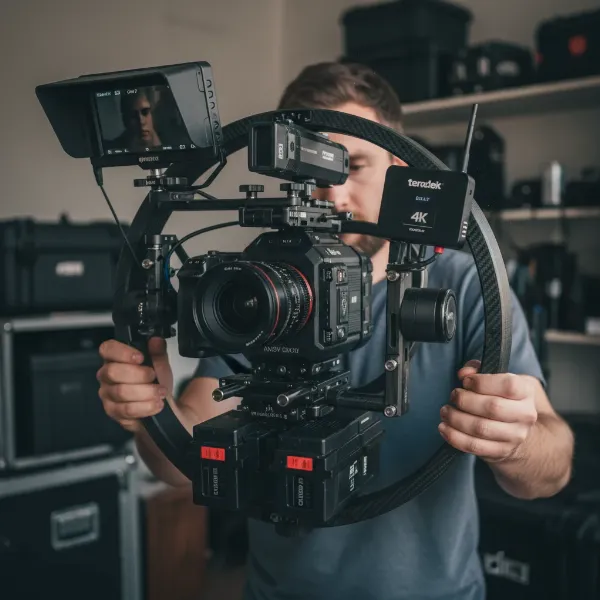 Filmmaker balancing a DJI Ronin gimbal mounted on a ring grip with external accessories
Optimizing Your Ring Grip Experience
With your DJI Ronin ring grip successfully set up, a few additional tips can help you get the most out of your new rig.
- Precision Balancing is Key: Don’t rush the balancing process. Even small imbalances can lead to motor vibrations or premature fatigue. Take your time to achieve perfect static balance on all three axes. Run the auto-tune function in the Ronin app after balancing to ensure optimal motor performance.
- Master Cable Management: A cluttered rig is a dangerous rig. Use short cables where possible, and strategically secure excess cable length with Velcro straps or zip ties. Ensure no cables interfere with the gimbal’s range of motion or snag during dynamic shots.
- Utilize Control Handles Effectively: If your ring grip features integrated control handles, familiarize yourself with their functions. Practice controlling gimbal movement, focus, and zoom without looking at the controls. This muscle memory will be invaluable during fast-paced shoots. For some setups, putting the control handle on the left side is recommended, as placing it on the right could lead to reversed controls in briefcase mode. [cite: 4search result 4]
- Regular Maintenance: Keep your ring grip clean, especially around mounting points and electrical contacts. Periodically check all screws and connections for tightness to prevent wobbles or accidental detachment of accessories.
- Explore Different Holding Techniques: Experiment with various ways of holding the ring grip to find what’s most comfortable and effective for different shots. The ability to quickly transition between standard, underslung, and briefcase modes is a major advantage.
- Battery Management: If using external batteries, monitor their charge levels closely. Consider having spare batteries or a hot-swappable setup for continuous power during long shooting days.
Conclusion
Integrating a ring grip into your DJI Ronin setup is a transformative upgrade for any serious filmmaker. By enhancing stability, mitigating operator fatigue, and providing a robust platform for all your essential accessories, it empowers you to capture more dynamic, professional-looking footage with greater ease and comfort. From assembling the frame to fine-tuning your balance, each step contributes to a more efficient and enjoyable shooting experience. Embrace the versatility of a ring grip, and unlock new creative possibilities with your DJI Ronin.
What creative shots or challenging setups are you looking forward to tackling with your new DJI Ronin ring grip?
Frequently Asked Questions
What is the primary benefit of using a ring grip with a DJI Ronin gimbal?
|
Our Picks for the Best Washing Machine in 2026
As an Amazon Associate I earn from qualifying purchases.
|
||
| Num | Product | Action |
|---|---|---|
| 1 | Waterjoy Portable Washing Machines, 7.7 lbs Load Capacity Portable Washer and Dryer Combo with Built-in Barrel Light & LED Display for Household and Apartment (Blue) |

|
| 2 | Giantex Portable Washing Machine, 21lbs Capacity, 14.4lbs Washer and 6.6Llbs Spinner, Compact for Apartment RV, White & Gray, GT-GE-10390US-GR-FP |
|
| 3 | COSTWAY Portable Washing Machine, Twin Tub 26lbs Capacity Laundry, 18lbs Washer and 8lbs Spinner Combo with Timer Knobs, Built-in Drain Pump, Compact Washer for Home Dorm Apartment (Grey+White) |
|
| 4 | Avanti Portable Compact Washing Machine for Clothes/Laundry, 0.84 Cu. Ft. Capacity, Standard Sink/Faucet Attachment for Apartment, Dorm, RV, White |
|
| 5 | Portable Washing Machine - Compact 2.0 Cu.ft Portable Washer, Full-Automatic Top Loader for Space Saving, Ideal for Apartments, Homes, and Dorms, 10 Wash Cycles, Low Noise, IPX4 with Drain Pump |
|
| 6 | COSTWAY Portable Washing Machine, Twin Tub 26 Lbs Capacity, 18 Lbs Washer and 8 Lbs Spinner, Compact Washer with Control Knobs, Timer Function, Drain Pump, Laundry washer for Apartment RV, Blue |
|
| 7 | Portable Washing Machine,16L Upgraded Large Capacity Portable Washer With 3 Modes Deep Cleaning.Suitable For Travel, Camping,Apartments, Dormitories, Hotels (Green) |
|
| 8 | Giantex Portable Washing Machine, 20lbs Capacity, Twin Tub 2lbs Washer & 8lbs Spinner Combo, Compact for Apartment RV Dorms, Blue & White, GT24267-PE |
|
| 9 | COSTWAY Portable Washing Machine, Twin Tub 26lbs Capacity Laundry Washer, 18lbs Washer and 8lbs Spinner Combo with Timer Knobs, Built-in Drain Pump, Compact Washer for Home Dorm Apartment, Blue+White |
|
| 10 | Giantex Portable Washing Machine, 17.6lbs Compact Washer Spinner Combo with Pump Drain, Twin Tub 11lbs Wash & 6.6lbs Spin, Lavadoras Portatiles for Apartment RV Dorm College (White & Blue) |
|
The main benefit is significantly enhanced stability and reduced operator fatigue, especially during prolonged shooting sessions. By distributing the gimbal’s weight across both hands and providing a more ergonomic grip, it allows for smoother footage and more comfortable operation. [cite: 1search result 1, 3search result 3]
Is a ring grip compatible with all DJI Ronin models?
Most ring grips are designed for the DJI RS series, including the RS 2, RS 3, RS 3 Pro, RS 4, and RS 4 Pro. Always check the specific compatibility information provided by the ring grip manufacturer to ensure it matches your particular Ronin gimbal model. [cite: 2search result 2]
Can I power my DJI Ronin and accessories directly from the ring grip?
Yes, many ring grips are designed to integrate with external power solutions. You can often mount V-mount or Gold-mount battery plates directly to the ring, which can then power your gimbal, camera, and other accessories via D-tap ports, providing extended run times. [cite: 1search result 1, 2search result 2, 5search result 1]
Do I need to re-balance my gimbal after installing the ring grip?
Absolutely. After installing the ring grip and all your desired accessories, it is crucial to re-balance your DJI Ronin gimbal. The added weight and shifted center of gravity will alter the gimbal’s balance, requiring a re-calibration to ensure smooth operation and prevent motor strain. [cite: 5search result 1]
What’s the difference between a “Basic” and “Advanced” ring grip?
The main difference often lies in the integrated controls. Basic ring grips focus on ergonomics and accessory mounting, while advanced ring grips frequently include electronic control handles with joysticks for gimbal control, focus wheels for lens control, and sometimes camera record functions.