Capturing the raw energy of sports and the thrilling pace of action often presents a significant challenge for filmmakers. The quest for buttery-smooth, cinematic footage amidst rapid movement can seem daunting, with shaky clips often ruining otherwise perfect moments. This is where a gimbal becomes an indispensable tool, transforming chaotic motion into captivating visual stories. Whether you’re documenting extreme sports, a local soccer match, or fast-paced events, understanding how to effectively wield a gimbal is key to elevating your videography. This comprehensive guide will walk you through the essential techniques, optimal settings, common pitfalls to avoid, and advanced tips to ensure your action footage is always professional and dynamic.
Understanding Your Gimbal: The Foundation for Action Shots
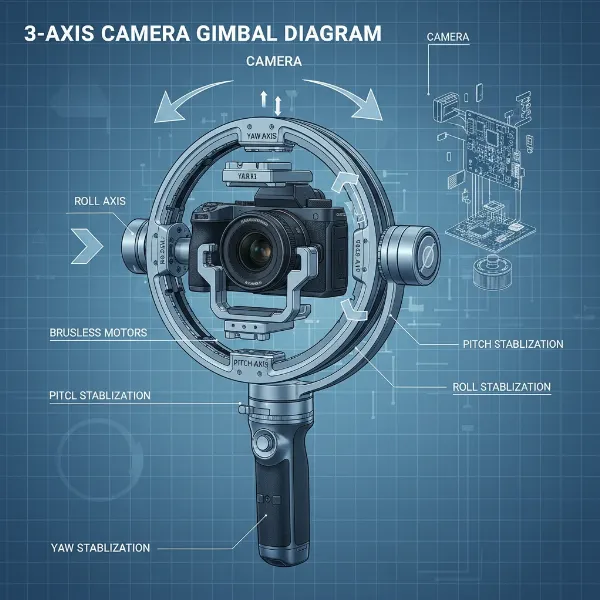
A gimbal is an electronic stabilizer that uses motors and sensors to keep your camera level and steady across three axes: pan (left-right), tilt (up-down), and roll (rotation). Unlike traditional handheld shooting, a gimbal actively counteracts your movements, delivering incredibly fluid footage that would otherwise require much larger and more complex equipment. For sports and action, gimbals excel by providing a stable platform that can keep up with fast-moving subjects while maintaining cinematic quality.
Different gimbal modes are crucial for varying action scenarios:
- Pan Follow Mode: The camera pans left and right with your movement but stays locked on the tilt and roll axes. Ideal for following horizontal action while keeping the horizon level.
- Pan & Tilt Follow Mode: The camera follows your pan and tilt movements, but the roll axis remains locked. This mode is excellent for tracking subjects that move both horizontally and vertically, like a skier descending a slope.
- Lock Mode (All Lock): The camera points in a fixed direction regardless of how you move the gimbal. Perfect for dolly-style shots or moving along a straight line with a consistent perspective.
- POV Mode (First-Person View): The gimbal follows all your movements, including roll, mimicking a natural hand-held perspective but with added smoothness. Great for highly dynamic, immersive shots or “vlog” style action.
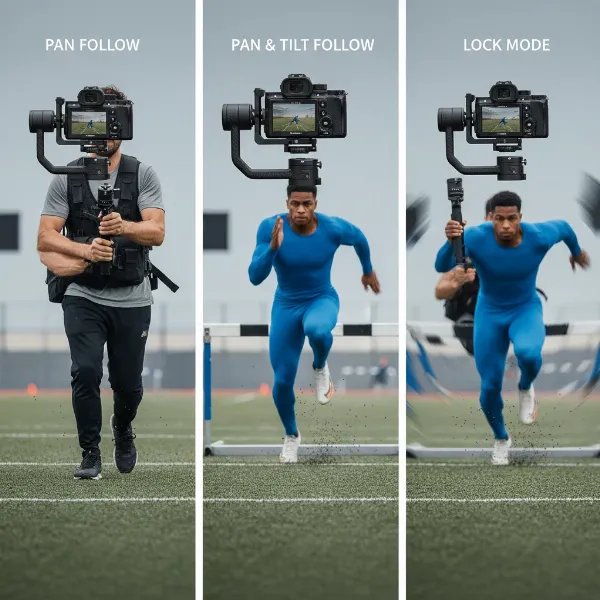 A gimbal with a camera mounted, illustrating different operational modes for sports videography.
Preparing for the Shot: Setup and Settings
Before you even hit record, meticulous preparation is paramount to achieving flawless action footage. The right setup and optimized settings can make or break your shot.
Balancing Your Gimbal
Correct balancing is the single most critical step. An unbalanced gimbal forces its motors to work harder, leading to reduced battery life, overheating, potential motor damage, and, most importantly, less stable footage.
- Mount your camera and all accessories (lens, microphone, monitor).
- Adjust each axis until the camera remains still when you let go, without the motors powered on. This ensures minimal strain on the motors and optimal performance.
|
Our Picks for the Best Washing Machine in 2026
As an Amazon Associate I earn from qualifying purchases.
|
||
| Num | Product | Action |
|---|---|---|
| 1 | Avanti Portable Compact Washing Machine for Clothes/Laundry, 0.84 Cu. Ft. Capacity, Standard Sink/Faucet Attachment for Apartment, Dorm, RV, White |

|
| 2 | COSTWAY Portable Washing Machine, Twin Tub 26lbs Capacity Laundry, 18lbs Washer and 8lbs Spinner Combo with Timer Knobs, Built-in Drain Pump, Compact Washer for Home Dorm Apartment (Grey+White) |
|
| 3 | Portable Washing Machine - Compact 2.0 Cu.ft Portable Washer, Full-Automatic Top Loader for Space Saving, Ideal for Apartments, Homes, and Dorms, 10 Wash Cycles, Low Noise, IPX4 with Drain Pump |
|
| 4 | COSTWAY Portable Washing Machine, Twin Tub 26 Lbs Capacity, 18 Lbs Washer and 8 Lbs Spinner, Compact Washer with Control Knobs, Timer Function, Drain Pump, Laundry washer for Apartment RV, Blue |
|
| 5 | Waterjoy Portable Washing Machines, 7.7 lbs Load Capacity Portable Washer and Dryer Combo with Built-in Barrel Light & LED Display for Household and Apartment (Blue) |
|
| 6 | Giantex Portable Washing Machine, 17.6lbs Compact Washer Spinner Combo with Pump Drain, Twin Tub 11lbs Wash & 6.6lbs Spin, Lavadoras Portatiles for Apartment RV Dorm College (White & Blue) |
|
| 7 | Giantex Portable Washing Machine, 21lbs Capacity, 14.4lbs Washer and 6.6Llbs Spinner, Compact for Apartment RV, White & Gray, GT-GE-10390US-GR-FP |
|
| 8 | Portable Washing Machine,16L Upgraded Large Capacity Portable Washer With 3 Modes Deep Cleaning.Suitable For Travel, Camping,Apartments, Dormitories, Hotels (Green) |
|
| 9 | Giantex Portable Washing Machine, 20lbs Capacity, Twin Tub 2lbs Washer & 8lbs Spinner Combo, Compact for Apartment RV Dorms, Blue & White, GT24267-PE |
|
| 10 | COSTWAY Portable Washing Machine, Twin Tub 26lbs Capacity Laundry Washer, 18lbs Washer and 8lbs Spinner Combo with Timer Knobs, Built-in Drain Pump, Compact Washer for Home Dorm Apartment, Blue+White |
|
Optimizing Gimbal Settings for Fast Action
For dynamic sports, your gimbal needs to react quickly and precisely.
- Follow Speed: Set this high. A faster response allows the gimbal to keep pace with rapid movements without lag, ensuring your subject stays framed accurately.
- Motor Strength: If your gimbal offers this option, increase the motor strength. Stronger motors provide better stabilization against sudden jolts and quick changes in direction.
- Deadband: Keep this setting minimal. The deadband dictates how much movement your gimbal tolerates before engaging its motors. A smaller deadband means the gimbal reacts almost instantly, which is vital for fast-paced action.
- Smoothness: While high smoothness is good for slow, cinematic moves, for action, a slightly lower smoothness setting might offer a more responsive, yet still controlled, feel. Experiment to find the sweet spot for your specific sport.
Essential Camera Settings
Beyond the gimbal, your camera settings play a huge role in capturing crisp, dynamic action.
- High Frame Rates: Shoot at 60 frames per second (fps) or higher (e.g., 120fps, 240fps). High frame rates provide smoother slow-motion playback, allowing you to highlight peak action moments with incredible detail.
- Shutter Speed: Follow the 180-degree shutter rule: your shutter speed should be approximately double your frame rate (e.g., 1/120 for 60fps). This creates natural motion blur, making fast-moving objects look more fluid rather than strobed.
- Exposure and White Balance: Dial in your exposure (ISO, aperture, ND filters) and white balance before filming. Constantly adjusting these during an action sequence can introduce distracting changes and ruin your shot.
- Lens Choice: Wide-angle lenses (16-35mm) are often excellent for sports, providing a broad field of view to keep subjects in frame and exaggerate movement and perspective. Longer lenses can isolate subjects but require more precise gimbal operation.
Essential Techniques for Dynamic Gimbal Movement
Operating a gimbal effectively for action is a dance between human movement and technological stabilization. Mastering your body mechanics is just as important as the gimbal settings.
Operator Movement Fundamentals
- The “Duck Walk”: When walking with a gimbal, bend your knees and walk heel-to-toe with a slight shuffle, keeping your core stable. This minimizes the natural up-and-down bobbing motion that even a gimbal cannot fully eliminate, resulting in incredibly smooth tracking shots.
- Two-Handed Grip: Always hold your gimbal with two hands, if possible. More points of contact provide greater control and stability, especially during dynamic movements or when handling heavier camera setups.
- Slow, Deliberate Movements: Even when shooting fast action, your own movements with the gimbal should be smooth and intentional. Resist the urge to chase the action haphazardly. Instead, anticipate the subject’s path and glide into position.
- Using Upper Body and Arms: For certain shots, like orbits around a stationary subject or slight lateral movements, try moving primarily with your arms and upper body rather than walking. This can yield a smoother, more controlled camera path.
Tracking Shots
Tracking a moving subject is a fundamental action technique.
- Consistent Distance and Framing: Practice maintaining a consistent distance from your subject and keeping them framed optimally within the shot, whether leading, following, or moving alongside.
- Anticipation: Sports photography requires anticipation. Predict where the action will go next to position yourself and your gimbal for the best possible shot.
Creative Gimbal Moves for Sports
- Orbit Shots: Smoothly circle your subject, keeping them in the center of the frame. This creates a dynamic, engaging perspective that draws the viewer into the action.
- Push-In/Pull-Out: Gradually move towards or away from your subject to emphasize their presence or reveal the surrounding environment.
- Low Angle Shots: Get down low to capture the action from a unique, often more dramatic, perspective. This can make athletes appear larger and more powerful.
- Fake Drone Shots: Attach your gimbal to a monopod and extend it overhead. With practice and a live-view monitor, you can simulate drone-like aerial shots.
- Tilt Up/Forward Push: As your subject approaches, tilt the camera up while pushing forward, creating an epic sense of scale and momentum, particularly effective with longer lenses and slow-motion.
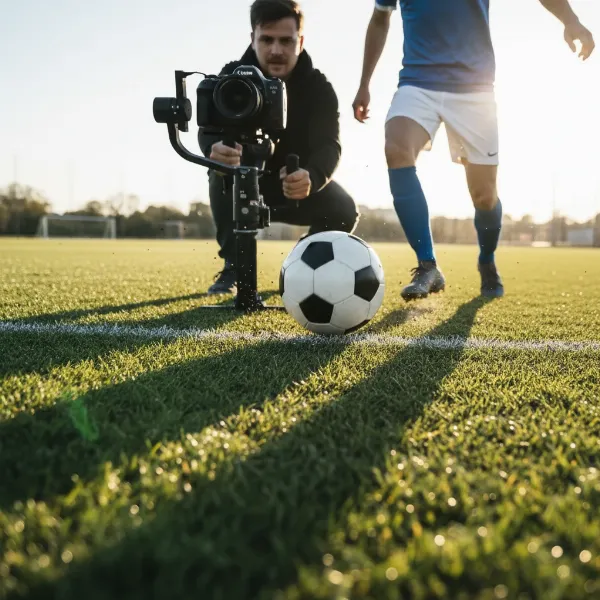 A videographer performing a creative gimbal shot like a low-angle tracking shot during a sporting event.
Avoiding Common Gimbal Mistakes in Sports Videography
Even seasoned videographers can fall prey to common errors. Being aware of these pitfalls will help you achieve consistently better results.
- Not Balancing Correctly: This leads to jerky movements, horizon drift, and excessive motor strain. Always balance your gimbal meticulously before powering it on.
- Using Default Settings: Gimbals come with factory settings, but these are rarely ideal for fast-paced action. Customize your follow speed, motor strength, and deadband for optimal performance.
- Aggressive or Jerky Movements: Trying to keep up with intense action by making sudden, aggressive movements will overwhelm the gimbal and result in shaky footage. Prioritize smooth, controlled operator movement.
- Ignoring Calibration: Over time, gimbal sensors can drift. Regular calibration (often through the gimbal’s app) ensures accuracy and prevents tilted horizons or leaning footage.
- Shooting Without a Plan: Randomly chasing action with your gimbal often leads to unusable footage. Plan your shots, anticipate movement, and have a clear idea of what you want to capture.
- Incorrect Mode Selection: Using the wrong gimbal mode for a specific movement can fight the stabilization. Understand when to use Pan Follow, Pan & Tilt Follow, Lock Mode, or POV.
- Forgetting Camera Settings: While focusing on gimbal movement, it’s easy to overlook crucial camera settings like exposure or white balance. Nail these before the action starts to ensure consistent, high-quality visuals.
Advanced Tips for Pro-Level Action Footage
Once you’ve mastered the fundamentals, these advanced tips can elevate your sports and action videography to a truly professional level.
- Active Tracking: Many modern gimbals feature AI-powered active tracking. Utilize this to lock onto your subject, allowing you to focus on your footwork and framing while the gimbal keeps the subject in the shot.
- Foreground and Background Usage: Incorporate elements in the foreground to add depth and a sense of speed to your shots. Similarly, a dynamic background can enhance the storytelling of the action.
- Post-Production Enhancement: The magic doesn’t end after shooting.
- Speed Ramping: Creatively combine normal speed with slow-motion to highlight key moments and add dramatic flair.
- Transitions: Use smooth, intentional transitions to connect different clips, maintaining the flow of the action.
- Color Grading: Professional color grading can significantly enhance the visual impact and mood of your footage.
- Practice and Patience: The ultimate secret to mastering gimbal operation for action sports is consistent practice. Rehearse movements, experiment with settings, and be patient with yourself. Every successful shot builds upon countless hours of learning and refining your craft.
“A gimbal is more than just a tool; it’s an extension of your creative vision. For action sports, it allows you to dance with the athletes, transforming raw energy into cinematic poetry.”
Conclusion
Capturing the exhilarating world of sports and action with a gimbal is an art that blends precise technology with intuitive human movement. By understanding your equipment, meticulously preparing, mastering essential techniques, and diligently avoiding common mistakes, you can consistently produce breathtaking, stable footage that tells compelling stories. The journey to becoming proficient takes time and dedication, but the reward is the ability to transform chaotic moments into smooth, cinematic narratives that leave a lasting impression.
What extreme sport will you capture first with your perfected gimbal skills?
Frequently Asked Questions
What is the ideal frame rate for shooting sports with a gimbal?
For smooth slow-motion playback, an ideal frame rate for shooting sports is 60 frames per second (fps) or higher, such as 120fps or 240fps. This allows for significant slow-down in post-production, capturing every detail of fast-moving action.
How do gimbals differ from Steadicams for action shots?
Gimbals are motorized stabilizers that use electronic sensors to actively counteract movement, making them generally lighter, faster to set up, and excellent for dynamic, handheld action like running. Steadicams are mechanical systems that use weights and an isolating arm, better suited for heavier cinema cameras and requiring more skill and setup time, though they often excel at absorbing vertical bounce during walking.
Should I use active tracking when shooting fast-moving subjects?
Yes, active tracking features on gimbals can be incredibly useful for fast-moving subjects. They allow the gimbal to automatically follow your subject, freeing you to concentrate on maintaining smooth body movement and precise framing without having to manually control the pan and tilt.
How often should I calibrate my gimbal?
It’s a good practice to calibrate your gimbal whenever you change your camera setup significantly, if you notice any drift or instability, or periodically (e.g., once a month) even if it seems to be working fine. Calibration ensures the motors and sensors are perfectly aligned for optimal performance.
Can I use a gimbal for still photography of sports?
While gimbals are primarily designed for video stabilization, they can be used for sports photography, particularly with heavier lenses, to reduce micro-jitters during long exposures or to achieve unique perspectives. However, for most still photography, a fast shutter speed and a steady hand or monopod are typically sufficient.