HE vs Regular Washing Machines
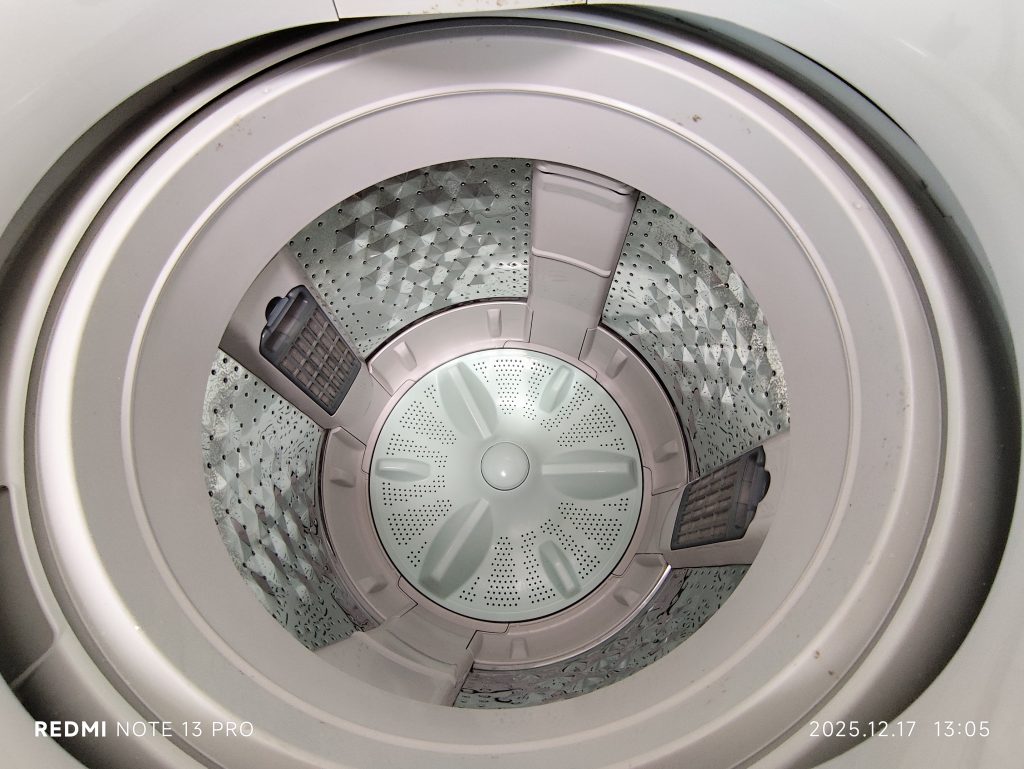
Quick Verdict: HE (High Efficiency) washers use less water and energy per load, require HE detergent, and include all modern front-loaders and most current top-loaders sold in the US. Traditional “regular” top-load washers with full agitators use more water but require less attention to detergent type and wash without concern for sudsing. For the vast majority of buyers today, HE is the default choice — not a premium upgrade. The question is really which type of HE washer suits your household, and whether a traditional agitator still makes sense for your specific laundry habits.
HE vs Regular Washers: Key Differences at a Glance
| Feature | HE Washer (Front-Load or HE Top-Load) | Regular (Traditional Agitator Top-Load) |
|---|---|---|
| Water Per Load | 13–25 gallons typical | 30–45 gallons typical |
| Energy Use | Lower — Energy Star certified | Higher — most not Energy Star |
| Detergent Required | HE-formulated (low-suds) | Standard or HE both acceptable |
| Spin Speed | 900–1,400 RPM (front-load) | 700–900 RPM |
| Wash Performance | Excellent (front-load); Good (HE top-load) | Good on heavy cotton; average overall |
| Cycle Time | 45–75 min (HE top-load typically longer) | 35–55 min |
| Drum Capacity | 4.0–6.0+ cu. ft. | 3.2–4.5 cu. ft. typical |
| Annual Energy Cost | Lower — typically $30–$60/year | Higher — typically $80–$130/year |
| Upfront Price | $500–$1,300+ | $500–$1,200 (Speed Queen premium) |
How We Evaluated These Washer Types
This comparison draws on Energy Star efficiency data, Consumer Reports washer category ratings, and expert analysis from Reviewed.com and Wirecutter. We examine what distinguishes HE from traditional washers across performance, efficiency, cost, and practical use. No placement fee was received from any manufacturer.
What Makes a Washer “HE”?
High Efficiency certification means a washer meets minimum thresholds for Modified Energy Factor (MEF or IMEF) and Water Factor (WF or IWF) set by the Association of Home Appliance Manufacturers. In practice, HE washers achieve this by using less water per cycle, spinning faster to extract more moisture before drying, and adapting water fill level to load size via auto-sensing. All current front-load washers are HE. Most current top-load washers sold in the US are also HE (impeller design). The “regular” washer category now occupies a shrinking segment: traditional full-agitator machines that do not meet HE thresholds.
Water and Energy Savings: The HE Advantage
The efficiency difference is substantial and well documented. A traditional agitator top-loader uses 30–45 gallons per load; an HE front-loader uses 13–20 gallons for the same load. Over 300 wash cycles per year (roughly a household average), that is a difference of 3,000–7,000 gallons annually. Energy Star estimates that replacing a standard top-loader with an Energy Star certified washer saves roughly $45 per year in energy and water costs, with actual savings varying by local utility rates.
Higher spin speeds in HE front-loaders (1,200–1,400 RPM vs 700–900 RPM in traditional machines) extract more moisture from clothes before they enter the dryer, meaningfully reducing dryer cycle time — which adds further energy savings beyond the wash cycle itself.
Detergent: The Main HE Requirement
HE washers require HE-formulated detergent — the label carries an “HE” symbol on the bottle. HE detergents are formulated to produce fewer suds in lower water volumes; using regular high-suds detergent in an HE machine creates excess foam that the low-water wash cycle cannot rinse away effectively, leaving residue on clothes and in the drum. HE detergent is universally available in grocery and big-box stores and is not more expensive than standard detergent; the transition is a one-time adjustment, not an ongoing cost burden.
Wash Performance
Front-load HE washers lead all washer types on stain removal in independent expert testing. HE top-loaders — such as the Maytag MVW7232HW with its Power impeller — perform above average for their type but generally trail top-rated front-loaders. Traditional agitator machines perform well on heavy cotton but average to below average on mixed loads and delicate fabrics. For households with a high proportion of heavy workwear, a quality agitator like the Speed Queen TR7 is competitive; for most mixed-load households, HE technology — especially front-load — produces better wash results.
Cycle Time
Traditional agitator machines generally have shorter cycle times (35–55 minutes) than HE washers. HE front-loaders with quick-wash features can complete cycles faster — LG’s TurboWash 360° on the WM4000HWA targets under 30 minutes for normally soiled full loads. Standard HE top-loaders, however, often run longer cycles (55–75 minutes) than traditional machines. Buyers who prioritize speed should factor this in, particularly for high-volume laundry days.
Is a Regular Washer Ever the Right Choice in 2026?
Yes, in specific circumstances. The Speed Queen TR7 — a traditional agitator top-loader — is one of the most compelling washers on the market for buyers who prioritize mechanical durability, repairability, and a 25-year lifespan over efficiency scores. For households with well water, hard water, or properties where minimizing electronic component failure is a priority, a simple-mechanical traditional washer is a defensible choice. The TR7’s 7-year warranty and commercial-grade construction justify its price even against modern HE alternatives. However, for most standard households in a typical home, HE washers now offer better performance, lower running costs, and comparable upfront pricing — making them the default sensible choice.
Which Should You Buy?
Choose an HE Washer (Front-Load) If:
You want the best wash performance, lowest water and energy use, and are open to front-load ergonomics. The GE GFW650SSNWW and LG WM4000HWA are the standout mid-range options.
Choose an HE Washer (Top-Load) If:
You prefer top-load ergonomics, want large capacity without front-load maintenance concerns, and do not need maximum efficiency. The Maytag MVW7232HW (5.3 cu. ft., Power impeller) is the standout choice.
Choose a Traditional Agitator Washer If:
You wash primarily heavy cotton, want a machine designed for maximum longevity and repairability, and are willing to pay a premium upfront for a 20+ year lifespan. The Speed Queen TR7 is the only model in this category worth the premium.
Frequently Asked Questions
Can I use regular detergent in an HE washer?
No — using standard high-suds detergent in an HE washer creates excess foam that the low-water cycle cannot rinse away, leaving residue on clothes and in the drum. HE detergent (look for the HE symbol on the bottle) is widely available at no price premium over standard detergent and is required for proper HE performance.
How much water does an HE washer save per load?
Compared to a traditional agitator top-loader, an HE front-loader typically uses 13–20 gallons per load versus 30–45 gallons — a saving of roughly 15–25 gallons per load. For a household running 7–8 loads per week, that represents approximately 5,000–10,000 gallons per year.
Are HE washers slower than regular washers?
Standard HE cycles are often longer — especially on HE top-loaders. HE front-loaders with quick-wash technology (like LG’s TurboWash) can complete a full load in under 30 minutes. Traditional agitator machines typically run 35–55 minute cycles. If cycle speed is the primary concern, a front-loader with a quick-wash feature is generally faster than a traditional top-loader on the same load.
Do HE washers clean as well as regular washers?
HE front-load washers clean better than traditional agitator machines on most fabric types in independent testing. HE top-loaders clean comparably to agitators on cotton and better on delicates. The claim that regular washers are somehow “more thorough” due to more water is not supported by independent expert testing — HE front-loaders consistently rank at the top of stain removal benchmarks.
Is an HE washer worth the extra upfront cost?
For most households, yes. The efficiency savings over a 10-year lifespan (lower water and energy bills, shorter dryer cycles) typically offset the modest upfront premium over a comparable traditional machine. At the same time, entry-level HE top-loaders start at $500–$600 — comparable to or less than entry agitator machines — so the “premium” is not always present.
Last updated: June 2026
See our main guide: Best Washing Machines.